A shutter left half-open at the back of a commercial unit. An alarm activation at 2.13am. A vacant property showing signs of attempted entry. These are the moments when a static security plan can fall short – and when understanding what is mobile security patrol becomes commercially important.
Mobile security patrol is a professional security service in which licensed officers carry out scheduled or random inspections of a site using marked or unmarked vehicles, and when needed, on foot. The purpose is straightforward: to deter criminal activity, identify risks early, respond to incidents quickly, and provide visible reassurance that your premises are being actively protected outside normal operating hours.
For many businesses, it sits between two other models. It offers more active protection than simply locking up and relying on an alarm, but without the ongoing cost of placing a full-time guard on site around the clock. That balance is a large part of its appeal.
What is mobile security patrol and how does it work?
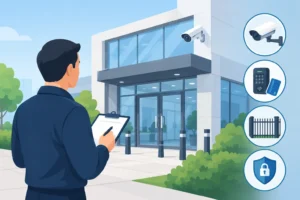
In practical terms, a mobile patrol officer visits your premises at agreed times or at irregular intervals designed to avoid predictability. During each patrol, the officer checks vulnerable access points, looks for signs of forced entry, confirms that doors and windows are secure, inspects the perimeter, and identifies issues such as suspicious activity, damage, fire hazards or unsafe conditions.
The patrol may also include internal checks where authorised, lock-up verification, open-up support, welfare checks, and response to alarm activations. If an incident is discovered, the officer follows an agreed escalation procedure. That might mean securing the premises, attending with a key, liaising with emergency services, gathering site information, or notifying nominated contacts.
A well-run service is not simply a vehicle passing by. It is a managed security operation with documented procedures, audit trails, communication protocols and officers trained to make sound decisions under pressure.
Why businesses use mobile patrols
Commercial premises are rarely exposed in exactly the same way. An industrial estate faces different risks from a town-centre office, and a vacant property has different vulnerabilities from a busy healthcare site. Mobile patrols are used because they can be adapted to these realities without forcing every business into the cost profile of permanent guarding.
One of the main benefits is deterrence. A visible security presence, especially one that arrives at varying times, can reduce opportunistic theft, vandalism, trespass and unauthorised access. Criminals generally prefer easy targets. A site known to receive active patrols is less predictable and therefore less attractive.
There is also the issue of response. If an alarm sounds in the middle of the night, many organisations do not want a member of staff or a keyholder attending alone. That carries personal risk and can expose the business to liability. A professional mobile security service allows incidents to be handled by trained personnel instead.
For facilities and operations teams, there is a practical management benefit as well. Mobile patrols provide an additional layer of oversight across one site or multiple locations, without the complexity of supervising an in-house overnight team.
Where mobile security patrols are most effective
This type of service works particularly well for offices, warehouses, industrial units, retail premises, schools, healthcare settings, construction projects and empty buildings. It is also valuable for multi-site organisations that need consistent standards across different locations.
That said, suitability depends on risk. A site holding high-value stock, sensitive data, hazardous materials or critical infrastructure may require a blend of services rather than patrols alone. In some cases, mobile patrols are ideal as part of a wider package that includes key holding, alarm response, lock-up services and manned guarding.
The best security arrangements are usually based on exposure, operating hours, layout, incident history and local environment – not on a one-size-fits-all assumption.
What happens during a typical patrol?
A proper patrol is methodical. Officers are usually assigned clear instructions for each site so checks are relevant to the premises rather than generic. That could include confirming roller shutters are fully secured, inspecting gates and fencing, checking loading bays, examining fire exits, or ensuring lights and alarms are set correctly.
Where businesses require a more tailored service, patrol officers may also check for evidence of occupation in vacant buildings, verify that contractor areas are secure, or look for maintenance issues that could create security weaknesses. A broken lock, poor lighting or damaged boundary line may not look urgent at first glance, but left unresolved it can increase exposure significantly.
After each visit, there should be a record of attendance and any actions taken. For commercial clients, that reporting matters. It creates accountability, helps demonstrate due diligence and allows patterns or recurring concerns to be identified before they become incidents.
Mobile patrols compared with static guarding
The question is not which service is better in absolute terms. It is which service is right for the risk and budget involved.
Static guarding gives continuous on-site presence. That can be appropriate for high-footfall sites, complex access control environments, critical assets or premises where immediate intervention is frequently needed. It also comes with a higher cost because the resource commitment is far greater.
Mobile patrols are usually more cost-effective for businesses that need visible checks, lock and unlock support, alarm attendance or out-of-hours inspections, but do not require a guard stationed on site at all times. They are especially useful when risks are periodic rather than constant.
In some settings, a mixed model works best. A site might use manned guarding during core hours and mobile patrols overnight or at weekends. The right answer depends on what needs protecting, how often incidents occur, and how quickly attendance is required.
What to look for in a provider
Because patrol officers are entrusted with access, escalation and incident handling, provider standards matter. Businesses should look beyond price and ask whether the company operates with the discipline required for high-responsibility response work.
Licensing is fundamental. Officers should hold active SIA licences, and the provider should be able to evidence structured procedures, training, supervision and clear reporting lines. Accreditation also carries weight. It shows that systems, quality controls and operational processes are being held to recognised standards rather than left to assumption.
Experience matters too, particularly when dealing with commercial property, alarm activations and sensitive access arrangements. A patrol service should be dependable at 3am in poor weather, not just convincing during a sales conversation.
This is one reason many organisations choose established providers such as Key Control Services – the expectation is not simply attendance, but reliable attendance backed by accredited processes and real operational experience.
Common misconceptions about mobile security patrols
One misunderstanding is that patrols are only for large companies. In reality, they are often a practical option for SMEs that need stronger out-of-hours protection but cannot justify a permanent on-site team.
Another is that patrols are limited to driving past and checking the front gate. A professional service is more thorough than that. It should involve site-specific inspections, documented actions and a clear incident response plan.
There is also a tendency to think mobile patrols are only reactive. While alarm response is a major part of many contracts, the patrol function is proactive as well. Its value often lies in identifying vulnerabilities before they lead to loss, damage or disruption.
Is mobile security patrol right for your site?
If your business has periods when premises are empty, staff should not attend alarms alone, or you need a stronger visible deterrent without the cost of full-time guarding, the answer may well be yes. It is particularly relevant where risk exists outside trading hours, across multiple locations, or in properties that are not occupied every day.
The real question is not simply what is mobile security patrol, but what level of patrol, response and reporting your operation actually needs. A low-risk office may need periodic lock-up checks and alarm attendance. A vacant commercial building may need more frequent visits and closer inspection of entry points and occupation risk. A logistics site may need integrated services to protect both the perimeter and the continuity of operations.
Security works best when it matches the reality of the site. If patrols are planned properly, delivered by licensed professionals and supported by clear procedures, they offer more than a visible presence. They provide peace of mind, reduce operational vulnerability and help ensure that when something goes wrong, somebody capable is already prepared to deal with it.
If you are reviewing security arrangements for a commercial property, mobile patrols are often not the extra service – they are the sensible layer that closes the gap between being locked up and being properly protected.