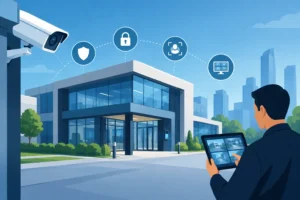
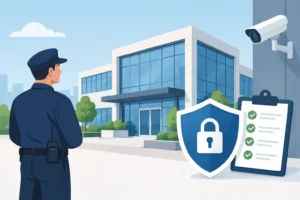
An alarm activation at 2am is not the moment to find out your security provider cuts corners. When your premises, keys, staff safety and business continuity are on the line, choosing an SIA approved security company is about far more than ticking a compliance box. It is about knowing the people responding to incidents are properly vetted, professionally managed and operating to recognised standards.
For commercial clients, that distinction matters every day. Whether you need key holding, alarm response, mobile patrols, manned guarding or vacant property inspections, the quality of your security partner affects risk, response times and the confidence your team has in the arrangements around them. Not every provider offers the same level of oversight, accountability or operational discipline.
What an SIA approved security company actually means
The Security Industry Authority, or SIA, is the regulator for the private security industry in the UK. Many buyers are familiar with individual SIA licences, which are required for certain front-line security roles. An SIA approved security company goes further. It has achieved Approved Contractor status, which means the business itself has been independently assessed against recognised standards for service delivery, staff management and operational performance.
That difference is worth understanding. A company may employ licensed operatives, but that alone does not tell you much about how the wider business is run. Approved Contractor status looks at the organisation behind the officers and response teams. It is one of the clearest signs that a contractor takes compliance, consistency and professional standards seriously.
For a facilities manager or business owner, this provides practical reassurance. It suggests there are systems in place for recruitment, screening, training, assignment management and customer service. It also indicates the company is prepared to be scrutinised, rather than simply making broad claims about quality.
Why accreditation matters in day-to-day security work
Security is often judged at the point of failure. A missed patrol, a poor incident response, an unclear handover or an unprofessional officer can create exposure very quickly. Accreditations help reduce that risk because they require the provider to work to defined standards rather than informal habits.
In key holding and alarm response, for example, you are trusting a third party with access to your premises, sometimes outside working hours and often when nobody from your team is present. In manned guarding, you are placing that company at the front of your site operations, where officers may control access, challenge visitors, monitor activity and respond to incidents. In vacant property protection, the task is not only to deter trespass or theft but to identify issues early before they escalate into damage, claims or business disruption.
An accredited provider should bring structure to all of this. That means documented procedures, clear escalation routes, trained personnel and a more dependable service model. It does not mean incidents never happen. It means the response is more likely to be controlled, recorded and handled properly.
How to assess an SIA approved security company
The most reliable way to assess a security provider is to move beyond headline claims and ask how the service works in practice. An SIA approved security company should be able to explain its processes clearly and confidently.
Start with licensing and staffing. You need to know that front-line personnel hold the correct active SIA licences for the roles they perform. It is also sensible to ask about staff screening, supervision and experience. Security work often involves independent decision-making in live situations, so the calibre of the team matters as much as the existence of a licence.
Next, look at operational coverage. A provider may be accredited, but you still need to know whether it can respond effectively in your area, at your required times, and across one site or multiple locations. For businesses with out-of-hours risk, response capability is not an abstract benefit. It is the core of the service.
You should also ask about procedures for alarm activations, key management, incident reporting and escalation. If the answers are vague, that is a warning sign. Professional security should be process-driven. You want confidence that if an alarm triggers at night, if access is needed for a contractor, or if a site is found insecure, there is a clear and rehearsed method for handling it.
Finally, consider wider accreditations and quality standards. ISO 9001:2015, for example, indicates a commitment to quality management systems. It does not replace operational experience, but it does add another layer of assurance around consistency and accountability.
The trade-off between cost and confidence
Security buyers are often under pressure to manage budgets, and that is understandable. But the cheapest quote is rarely the most economical choice if service failures lead to break-ins, false economies in staffing, poor reporting or unnecessary risk to your employees.
This is where it helps to be realistic about what you are buying. With key holding and alarm response, you are not simply paying for someone to collect keys and attend site. You are paying for readiness, judgement, traceability and the ability to protect your business when no one else is there. With mobile patrols or manned guarding, you are paying for visible deterrence, controlled access and reliable site presence.
There is always a balance to strike. Some businesses need full-time guarding, while others are better served by a mix of mobile patrols, open-up and lock-up services, and alarm response. The right provider should help you match risk level to service level, rather than pushing a one-size-fits-all contract.
When local responsiveness makes a real difference
For businesses operating in Greater Manchester, local knowledge can strengthen an already accredited service. A provider with established coverage in the area is more likely to understand local operating conditions, travel routes, property types and the practical realities of responding quickly to incidents.
That said, local presence only adds value if it sits alongside professional standards. Familiarity is helpful, but it is not a substitute for licensing, procedures and accountability. The strongest combination is local responsiveness supported by recognised accreditations and experienced management.
This is often particularly relevant for industrial estates, office sites, mixed-use commercial premises and vacant properties, where response speed and confidence in site handling can have a direct impact on loss prevention and continuity.
Signs you may need a different security provider
Some businesses stay with an underperforming contractor simply because changing provider feels disruptive. In practice, the greater disruption often comes from accepting weak service for too long.
If incident reports are inconsistent, if response arrangements are unclear, if attendance times regularly disappoint, or if your team lacks confidence in the provider, it may be time to review the contract. The same applies if your current arrangement relies too heavily on your own staff being called out at unsociable hours. That can expose employees to unnecessary risk and create operational strain.
A dependable security partner should reduce pressure on your internal team, not add to it. They should create peace of mind through reliable attendance, clear communication and disciplined site handling.
Why experienced operators stand apart
Experience on its own is not enough, but it does matter. Security providers that have operated successfully over many years tend to have dealt with the realities that glossy sales material cannot hide – false alarms, attempted intrusions, vulnerable vacant sites, access issues, key control problems and the need to make sound decisions under pressure.
That depth of operational experience often shows in the details. Calls are handled properly. Escalations follow a sensible path. Site instructions are understood and followed. Clients receive clear reporting rather than vague assurances. For commercial buyers, those details are what make a service dependable.
This is also why many organisations look for a provider that combines longevity with formal accreditation. One shows practical staying power. The other shows a willingness to meet recognised standards and maintain them.
Choosing a security partner, not just a contractor
The best security relationships are built on trust, clarity and consistency. If you are appointing a company to hold keys, attend alarm activations, secure premises and protect staff and assets, you need more than a badge and a brochure. You need confidence that the service will stand up when tested.
An SIA approved security company gives you a stronger starting point because it reflects both individual licensing and wider business standards. From there, the right choice depends on your risks, your premises, your hours of operation and the level of support you need. For some organisations, that will mean a single service such as key holding. For others, it will mean a more joined-up approach across alarm response, patrols, guarding and property checks.
At KCS, that is exactly how commercial security should be approached – with accredited standards, experienced people and dependable 24/7 support that protects your premises without placing extra burden on your team. When security is handled properly, it gives you something every business values: the confidence to focus on the day ahead, knowing the site is in safe hands.