An alarm activation at 2am is not a theoretical risk. It is a live decision about who attends, how quickly they arrive, whether they have the right information, and how safely the situation is handled. The future of commercial security will be shaped by technology, but dependable protection will still depend on trained people taking accountable action when a business needs it most.
For facilities managers, property owners and operations teams, the priority is not simply adding more cameras or sensors. It is building a security arrangement that identifies risk early, protects people, maintains control of access and keeps disruption to a minimum. That requires a considered blend of intelligent systems, professional monitoring and reliable physical response.
The future of commercial security is connected
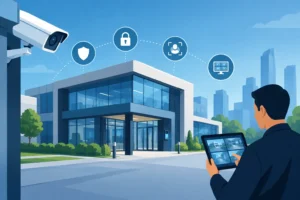
Commercial security systems are becoming more connected. Intruder alarms, CCTV, access control, fire systems and building management platforms can increasingly share information, allowing incidents to be assessed with greater speed and context.
Instead of treating an alarm signal as a single event, businesses can understand what is happening around it. A door forced open after hours, movement detected in a restricted area and a camera alert from the same location create a clearer picture than any one system could provide alone. This can reduce unnecessary call-outs and help security teams prioritise genuine threats.
However, connected technology also creates a dependency on good configuration, clear procedures and regular maintenance. More data does not automatically mean better security. If alerts are poorly set up, staff can be overwhelmed by notifications or critical warnings can be missed. The value lies in turning information into a proportionate response.
Faster verification, better decisions
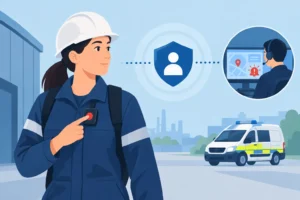
Remote video monitoring and intelligent analytics will play a larger role in verifying incidents before a response is deployed. For some sites, this may mean distinguishing between a delivery driver, wildlife and suspicious activity before an operative is tasked. It can make response more efficient and avoid disturbing keyholders for false alarms.
There are limits. Camera coverage may be incomplete, poor lighting can affect visibility, and an event may develop before remote assessment is complete. For that reason, technology should support decision-making rather than replace the need for an experienced responder. A verified incident still needs somebody capable of attending, securing the premises and liaising with emergency services where necessary.
Physical security will remain essential
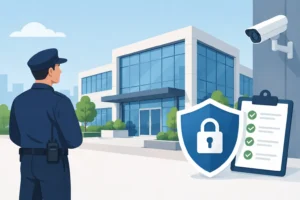
The most advanced security platform cannot lock an unsecured gate, challenge an unauthorised person, inspect signs of forced entry or provide a visible presence at a vulnerable site. Physical security will remain central to commercial protection, particularly for industrial units, vacant buildings, retail premises, offices and multi-site estates.
Mobile patrols, manned guarding, key holding and alarm response give businesses a practical layer of protection beyond the control room. They provide reassurance that an incident will be dealt with by trained professionals rather than placing employees, directors or facilities staff in an unsafe position.
This is especially relevant outside normal operating hours. Asking a nominated employee to attend an alarm activation in the early hours can expose them to unknown risks and create avoidable pressure. A professional key holding service allows an authorised, trained responder to attend on the business’s behalf, assess the situation and take the agreed action.
The future will not be entirely remote. It will be a more coordinated model in which systems identify concerns quickly and security professionals respond with judgement, presence and authority.
Access control will become a business continuity issue
Keys, fobs, cards, mobile credentials and contractor access all need closer control. As work patterns change and businesses manage more flexible premises, access security is becoming less about opening a door and more about knowing who can enter, when they can enter and what areas they are permitted to use.
Many organisations still hold unnecessary risk through informal key arrangements. Keys may be copied without record, retained by former employees or stored in locations that are convenient but insecure. Physical key management, supported by clear audit trails and authorised key holding, remains a simple but important safeguard.
Digital access control can provide useful records and enable permissions to be changed quickly. Yet it also requires disciplined administration. A system is only as reliable as the process behind it. Departing staff, changing contractors and temporary visitors must be managed promptly, or access rights can become an unnoticed weakness.
For higher-risk premises, businesses should review access as part of their wider operational resilience planning. This includes who holds emergency keys, who can authorise entry, how out-of-hours access is recorded and what happens if a keyholder cannot attend.
Vacant properties need earlier intervention
Vacant commercial property presents a growing security challenge. Empty buildings can attract trespass, theft, vandalism, fly-tipping and damage caused by water leaks or fire. A minor issue left undetected can quickly become a costly insurance, compliance and repair problem.
The future of commercial security will place greater emphasis on prevention and regular evidence-based inspection. Remote systems can flag a possible issue, but inspections remain necessary to identify damaged fencing, forced access, signs of occupation, unsafe conditions and maintenance concerns that technology may not reveal.
Scheduled vacant property inspections, mobile patrols and open-up or lock-up services can help maintain control when a site is between tenants, undergoing refurbishment or temporarily closed. The right frequency depends on the property type, location, condition, asset value and insurer requirements. A city-centre office suite may need a different approach from an isolated industrial unit.
Security providers will be judged on accountability
As security services become more integrated, businesses will expect clearer proof that their provider can deliver. Response times, patrol records, incident reports, escalation procedures and staff licensing will carry more weight in procurement decisions.
Price will always matter, but the lowest-cost arrangement can prove expensive if it leaves gaps in coverage or relies on poorly trained personnel. Commercial buyers should look beyond a basic service description and ask practical questions. Who attends an alarm activation? How are keys controlled? What training and licensing do operatives hold? What information is provided after an incident? How is service quality monitored?
Accreditation is also a useful indicator of operational discipline. SIA Approved Contractor Status and ISO 9001:2015 quality accreditation demonstrate a commitment to recognised standards, although businesses should still ensure the proposed service reflects the specific risks of their site.
At KCS, active SIA licensing across staff and directors, combined with established operational procedures, supports the high-responsibility work of key holding, alarm response and property protection. For clients, this means confidence that sensitive access and urgent incidents are handled by a security partner built around accountability.
A practical plan for the next stage of security
The best preparation is not to replace every existing measure at once. It is to identify the points where a security failure would have the greatest impact: an unsafe alarm response, uncontrolled keys, a vulnerable perimeter, a vacant unit or a lack of cover when a responsible employee is unavailable.
From there, organisations can review whether their current arrangements provide genuine 24/7 protection. This should include testing alarm response procedures, confirming emergency contacts, checking access permissions and reviewing incident records for recurring weaknesses. A security plan should be regularly reviewed after changes to the building, workforce, operating hours or threat level.
Technology will continue to improve how quickly businesses can see and understand a developing risk. But the organisations best protected will be those that pair those tools with clear procedures and a trusted physical response. When the next out-of-hours incident occurs, peace of mind comes from knowing exactly who is taking control.