A missed alarm call at 2am can become a staff welfare issue, a property damage claim, or a serious interruption to trading by morning. That is why commercial security services are not simply a box-ticking exercise for insurers or compliance teams. For many businesses, they are a practical way to reduce risk, protect people, and keep operations moving when something goes wrong.
For facilities managers, property managers, and business owners, the challenge is rarely deciding whether security matters. It is deciding what level of support is appropriate, what should stay in-house, and what is better handled by a specialist provider. The right answer depends on your building, your hours, your exposure to risk, and how quickly you need a reliable response when the unexpected happens.
What commercial security services actually cover
Commercial security services can mean different things from one site to the next. In practice, they usually sit around physical protection, access control, incident response, and visible deterrence. The goal is straightforward – reducing vulnerability across your premises, staff, and assets.
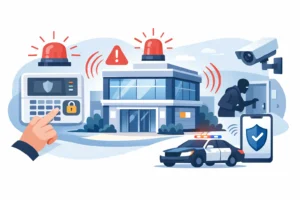
For some organisations, that starts with key holding and alarm response. Instead of asking employees to attend an out-of-hours activation, a trained security officer responds, checks the site, manages access, and escalates only when required. That protects your premises and removes unnecessary risk from staff who may not be equipped to deal with a live incident.
For others, the priority is a regular security presence. Manned guarding, mobile patrols, open-up and lock-up services, and vacant property inspections all support different operational needs. An occupied office with regular visitors has a different risk profile from an empty industrial unit, and a retail premises has different security pressures again. Good service provision reflects that, rather than forcing every client into the same model.
Why businesses outsource commercial security services
Running security in-house sounds attractive until the practicalities appear. Recruitment, vetting, rota planning, holiday cover, training, compliance, licensing, supervision, and response capability all need active management. For many commercial organisations, that is too much to carry internally, especially when security is important but not their core function.
Outsourcing gives access to trained personnel, established procedures, and 24/7 cover without building a full in-house team. It also creates more consistency. A professional provider should have escalation processes, audit trails, defined response standards, and the operational discipline needed for high-responsibility work such as alarm attendance and key management.
That said, outsourcing is not automatically better in every case. Large sites with complex public access or highly specialised operational demands may still retain some internal security resource. Often, the strongest approach is a mix of both – an in-house team handling day-to-day activity and an external partner providing out-of-hours cover, mobile response, or support across multiple locations.
The services that make the biggest difference
The most valuable security measures are often the least dramatic. Businesses tend to think first about break-ins, but many recurring problems are more routine – unsecured access points, false alarms, delayed site attendance, poor locking procedures, or vacant buildings left unchecked for too long.
Key holding and alarm response remain one of the most effective outsourced services because they address a common weakness. When an alarm activates outside normal hours, someone has to respond. If that responsibility falls to a manager or employee, there is a clear safety concern. If it falls to a trained officer with the right procedures, the response is safer and usually more controlled.
Mobile patrols are another useful option where full-time guarding is unnecessary but visible checks still matter. Patrol frequency, timing, and reporting should reflect real risk rather than a generic schedule. A site with repeated perimeter breaches needs a different approach from a low-traffic office block.
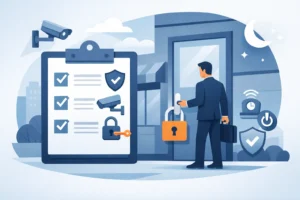
Open-up and lock-up services can also remove daily pressure from site teams. These tasks may seem routine, but they are often where inconsistency creeps in. Buildings left unsecured, alarms incorrectly set, or access points opened without proper checks all create avoidable exposure. A disciplined service helps standardise those critical moments at the start and end of the working day.
Vacant property inspections are particularly important for owners, landlords, and managers responsible for empty commercial premises. Empty buildings attract attention quickly. Without regular checks, small issues such as water ingress, attempted entry, fly-tipping, or minor vandalism can escalate before anyone notices.
What to look for in a security provider
The right provider should bring more than manpower. Commercial clients need evidence of standards, reliability, and control. Accreditation matters because it shows that quality systems, operational procedures, and compliance are being taken seriously. SIA Approved Contractor Status carries weight for that reason, as does ISO 9001:2015 certification.
Licensing is another essential point. Security personnel working in licensable roles should hold active SIA licences, and clients are right to ask how licensing is monitored across the team. This is not an administrative detail. It goes directly to competence, legality, and trust.
Experience also deserves closer attention than it sometimes gets. Longevity on its own is not enough, but a provider with a long-established track record in physical security and response work is more likely to have encountered the operational realities that affect service delivery. Alarm activations, key handling, lone attendance, site-specific instructions, and incident escalation all require judgement as well as process.
Responsiveness should be tested too. Ask what happens when an alarm activates. Who attends. How quickly they deploy. How incidents are reported. Whether photographs, attendance logs, and follow-up actions are provided. A security contract should not leave clients guessing what happened overnight.
Matching the service to the site
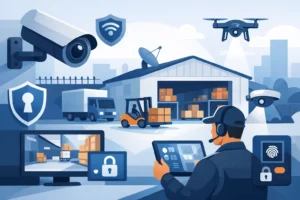
There is no single security package that suits every business. A warehouse storing high-value stock may need a combination of alarm response, patrols, and lock-up support. A healthcare environment may place more emphasis on controlled access and professional conduct around staff and visitors. A multi-site operator may value consistency of reporting across locations more than a permanent on-site presence at every building.
This is where risk assessment matters. The best commercial security services are shaped around site use, occupancy, access patterns, and known vulnerabilities. Budget is part of the discussion, but it should not be the only driver. A lower-cost arrangement that leaves large gaps in response cover can become expensive very quickly after one serious incident.
Location can also influence the service model. In busy urban areas across Greater Manchester, for example, response expectations, access challenges, and out-of-hours activity may differ significantly from those at remote industrial sites. Local knowledge can improve efficiency, but it still needs to sit alongside proper systems and nationwide capability where required.
Why reliability matters more than promises
Security buying decisions are often made on reassurance, but the real test comes when something goes wrong. If a provider cannot attend promptly, cannot follow site instructions, or cannot communicate clearly after an incident, the value of the service drops sharply.
That is why disciplined operations matter so much. Clear procedures, supervised teams, active licensing, auditable processes, and consistent reporting are not marketing extras. They are what give clients confidence that their buildings and people are being looked after properly.
For businesses that need support without the burden of building a full internal security function, providers such as KCS offer a practical route to dependable cover. The benefit is not simply having a security company on call. It is knowing there is an experienced, accredited team ready to protect your premises, manage access responsibly, and respond when it counts.
Commercial security services as part of business continuity
Good security does more than deter crime. It supports continuity. It helps prevent minor incidents becoming major disruptions. It reduces the chance of staff being placed in unsafe situations. It gives decision-makers confidence that key responsibilities are being handled by people trained for them.
That matters whether you manage a single premises or a large property portfolio. Security failures have a habit of affecting more than the building itself. They can interrupt operations, damage reputation, unsettle staff, and create avoidable cost. A well-chosen service helps limit that exposure.
The best time to review your arrangements is before there is a reason to regret them. If your current setup depends on over-stretched employees, inconsistent lock-up routines, or unanswered alarm activations, it may be time to look more closely at what professional support could take off your plate and what greater peace of mind would be worth to your business.