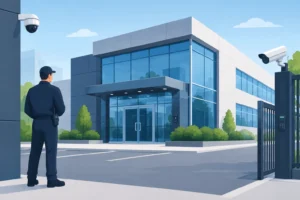
A forced door, an unsecured rear gate or an alarm activation at 2am can quickly become more than a building issue. It can disrupt trading, place staff at risk, compromise stock or sensitive information, and leave managers dealing with an incident they were not on site to prevent. Knowing how to secure commercial premises means planning for everyday access as carefully as out-of-hours threats.
The right approach is not simply to add more equipment. Effective commercial security combines physical protection, clear procedures and a dependable response when something goes wrong. The level of protection should reflect the premises, the assets held there, the hours of operation and the risks around the site.
Start with a practical premises security assessment
Before choosing guards, cameras or alarm systems, assess where your actual vulnerabilities lie. Walk the site as someone looking for an easy opportunity, including after dark if possible. Look beyond the main entrance. Delivery doors, fire exits, roof access, external plant areas, loading bays, car parks and poorly lit boundaries often create greater exposure.
Consider what happens at different points in the day. A busy office may be well supervised during working hours but almost empty from 6pm. An industrial unit may have valuable machinery and tools on site overnight. A vacant property faces a different set of risks, including trespass, theft, arson, water damage and deterioration that goes unnoticed.
Your assessment should identify the assets that matter most, the people who need access and the consequences of a security breach. This helps avoid overspending on low-risk areas while leaving critical points under-protected. It also gives you a sound basis for selecting a security provider and setting clear expectations.
Control who can enter your commercial premises
Access control is the foundation of day-to-day security. If keys, codes and entry permissions are managed loosely, even a well-equipped site can be vulnerable. Every person with access should have a legitimate business reason for it, and that access should be removed promptly when roles change or employment ends.
For smaller businesses, this may mean maintaining an up-to-date key register and limiting the number of keyholders. For larger or multi-site organisations, electronic access control can provide greater visibility, allowing permissions to be set by person, location and time. It can also create an audit trail of entry and exit activity.
Do not overlook contractor and visitor access. Reception procedures, visitor identification and escorted access in sensitive areas reduce the chance of unauthorised movement through the building. Delivery drivers should not be able to enter operational areas simply because a door has been left open for convenience.
Keys deserve particular attention. Unaccounted-for keys are a long-term risk, especially after staff turnover, tenancy changes or contractor works. A professional key holding service gives businesses a controlled, secure alternative to leaving keys with employees or relying on a single individual to attend an incident out of hours.
Strengthen the physical fabric of the building
Physical security should delay or deter intrusion long enough for a response to take effect. Start with doors, windows, shutters, gates and perimeter fencing. A weak rear door can undermine significant investment in alarms and surveillance.
External doors should be solid, correctly fitted and secured with appropriate locks. Consider protective measures such as security-rated shutters, grilles or anti-ram protection where the site or stock profile calls for them. Fire exits must remain compliant and safe for evacuation, but they should also be alarmed and checked so they are not misused as an unnoticed entry route.
Lighting is another practical deterrent. Well-positioned lighting improves visibility around entrances, pathways, car parks and loading areas, making it more difficult for intruders to approach unnoticed. It should not create glare or dark pockets that limit camera coverage. Regular maintenance matters here – a failed light or damaged fence can signal that a property is not closely managed.
Use alarms and CCTV with a response plan
An intruder alarm is only as useful as the action that follows an activation. Alarm monitoring can alert nominated contacts or an approved security response team, but businesses need a clear plan for who will attend, what they will do and how incidents will be escalated.
Asking an employee or director to investigate an alarm in the middle of the night may appear cost-effective, but it can expose them to unnecessary risk. They may arrive alone, without knowing whether the alarm is genuine or whether someone remains on site. Professional alarm response and key holding services provide a safer, more controlled solution, with trained personnel able to attend, assess the situation and liaise with emergency services where required.
CCTV can support deterrence, investigation and management oversight, particularly at entry points, high-value storage areas and external boundaries. However, cameras do not physically prevent entry or replace a timely response. They are most effective when camera views are correctly positioned, images are usable, retention periods are suitable and someone is responsible for acting on alerts.
When using CCTV, ensure your arrangements meet data protection obligations. Signage, access to recordings and retention practices should be properly managed. Security measures should protect your business without creating avoidable privacy or compliance issues.
Make opening and closing routines consistent
The first person to open and the last person to leave are often exposed to heightened risk. Opening a premises alone can leave staff vulnerable to confrontation, while hurried lock-up routines can result in unsecured doors, active equipment or missed alarm settings.
A documented open-up and lock-up procedure reduces reliance on memory. It should cover perimeter checks, internal checks, alarm setting or unsetting, key control, securing sensitive materials and reporting faults. Staff should know what to do if they find signs of a break-in, damage or an unknown person near the building.
For sites with early starts, late finishes or staff working alone, outsourced open-up and lock-up support can add reassurance. A security officer can attend at agreed times, complete checks and create a visible presence without placing operational staff in a security role they are not trained or contracted to perform.
Use patrols where risk is variable or spread across a site
Mobile security patrols are particularly useful for industrial estates, construction-adjacent locations, car parks, multi-building sites and premises that are empty overnight. Unlike a fixed guard, a mobile patrol can visit at scheduled or random intervals, inspect vulnerable areas and report issues before they develop into major losses.
Patrols should be designed around the risks of the site rather than treated as a generic visit. A worthwhile patrol may include checking doors and windows, perimeter fencing, external lighting, plant rooms, vehicle areas and signs of forced entry or antisocial behaviour. It may also identify operational concerns such as leaks, power faults or fire hazards.
The right frequency depends on the site. A high-value warehouse or recently targeted retail unit may need more frequent attendance than a low-risk office. Security should be reviewed after incidents, changes in occupancy, seasonal trading peaks or alterations to the building.
Protect vacant and temporarily unoccupied property
Empty premises are rarely low-risk premises. Once a building appears unoccupied, it can attract trespassers, vandals, metal thieves and opportunistic criminals. Small faults can also become expensive claims when there is no one present to spot them.
Vacant property inspections provide evidence that a site is being managed. Regular visits can identify damage, signs of entry, water ingress, fly-tipping, unsafe conditions and failures in boundary security. Insurers may also specify inspection requirements for unoccupied buildings, so check your policy conditions rather than assuming standard cover continues unchanged.
The inspection schedule should be proportionate. A short-term vacancy in a well-secured office differs from a long-term empty industrial unit with exposed yards and multiple access points. The key is to keep a documented record of inspections, findings and remedial action.
Choose a security partner on capability, not promises
When outsourcing security, look for evidence of disciplined operations. Relevant accreditations, active SIA licensing, documented procedures, trained personnel and reliable communication all matter when a provider is entrusted with keys, access and emergency attendance.
Ask how alarm activations are handled, how officers report their attendance, what escalation process applies and whether the provider can support changing needs across multiple sites. The cheapest arrangement may not offer the response times, reporting standards or continuity your business requires.
Key Control Services provides 24/7 physical security support for commercial clients, including key holding and alarm response, mobile patrols, manned guarding, open-up and lock-up services, and vacant property inspections. For businesses in Greater Manchester, a locally responsive partner can make a meaningful difference when an incident requires prompt attendance.
Commercial premises security is an ongoing operational responsibility, not a one-off installation project. Review it after a near miss, a change in staffing, a move, an expansion or a change in the value of assets on site. The most reassuring security arrangements are those your people can follow confidently and your business can rely on when nobody else is there.