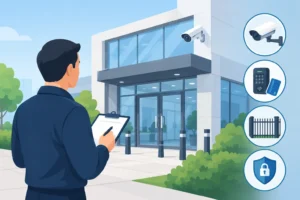
A side gate left unlatched at 10.30 pm. A roller shutter showing fresh tamper marks before staff arrive. An alarm activation that needs a trained, licensed response rather than a sleepy keyholder driving across town. The purpose of mobile patrolling is to spot risk early, maintain a visible security presence and give businesses a practical way to protect premises, people and assets without relying on chance.
For many commercial sites, security risk does not sit neatly within office hours. Industrial units, offices, retail premises, healthcare settings and vacant buildings all face different vulnerabilities, but the common issue is the same – problems often start small. A door is not secured properly. A fence panel is disturbed. A vehicle is left where it should not be. If these issues go unnoticed, they can quickly become theft, trespass, damage or operational disruption.
The purpose of mobile patrolling in business security
At its core, mobile patrolling is about regular, controlled security checks carried out by trained officers who visit a site at agreed times or on a variable schedule. These patrols are designed to deter unwanted activity, identify signs of intrusion or damage, and make sure the property remains secure when your own staff are not on site.
That sounds straightforward, but the value goes deeper than a simple walk-round. A mobile patrol provides independent verification that the condition of a site matches what it should be. Gates are locked, access points are intact, vulnerable areas are checked, and anything unusual is recorded and acted on. For businesses with no overnight staff, or for sites that do not justify a full-time guard, that can close a significant security gap.
The purpose of mobile patrolling also includes reducing the burden on employees. Many organisations still name internal keyholders to attend alarms or out-of-hours incidents. In practice, that can expose staff to avoidable risk, particularly if they arrive alone, late at night, and without the training to assess what has happened. Mobile security patrols, especially when combined with key holding and alarm response, remove that pressure and place responsibility with a professional provider.
Why visible patrols matter
Security is partly about response, but it is also about deterrence. A site that is known to be checked regularly is less appealing to opportunists. Patrol vehicles, marked uniforms and recorded attendance all signal that a property is actively managed.
This visible presence matters because many incidents are not highly planned crimes. They are opportunistic acts carried out where access looks easy and the chance of interruption looks low. If a premises appears neglected or unmonitored, it can attract trespass, metal theft, fly-tipping, vandalism or attempted entry. Regular patrols change that perception.
There is, however, a balance to strike. A highly predictable pattern can be less effective than one with some variation. That is why experienced providers often tailor patrol timing and frequency to the site, the surrounding area and the risk profile. A business on a quiet industrial estate may need a different patrol pattern from a town-centre office or a vacant property awaiting redevelopment.
Deterrence is strongest when it is credible
The presence of a patrol only works if it is backed by proper procedures. Officers need clear assignment instructions, site knowledge and escalation protocols. If they find an unsecured entrance, there must be authority to secure it or report it immediately. If they encounter suspicious activity, they need the judgement and training to respond appropriately. Businesses are not simply paying for someone to pass by. They are paying for accountable security activity.
Mobile patrolling as an early warning system
One of the most practical benefits of mobile patrols is early intervention. The sooner an issue is discovered, the more options a business has to contain it.
A simple example is water ingress from a damaged door or broken window. If identified overnight, a business can arrange urgent attendance before stock, equipment or flooring suffers greater damage. The same principle applies to signs of forced entry, perimeter breaches or safety hazards. What begins as a security patrol can prevent wider property loss and business interruption.
This is particularly relevant for multi-site operators and property managers. When responsibility is spread across several locations, it is difficult to maintain consistent oversight, especially outside normal working hours. Mobile patrolling creates a regular reporting structure. Instead of relying on assumptions, decision-makers receive confirmation that checks have been carried out and exceptions flagged.
In that sense, mobile patrols support both security and management control. They help businesses know what is happening at their premises when they are not there themselves.
Where mobile patrolling fits best
Not every site needs the same level of physical security. For some high-risk locations, manned guarding may be the right choice. For others, mobile patrols are the more proportionate and cost-effective option.
They are especially useful where a site is empty for long periods, where there are multiple access points to check, or where the cost of maintaining an in-house guarding team would outweigh the likely risk. Offices after hours, depots, industrial estates, schools, vacant commercial units and healthcare settings can all benefit, although the patrol model should reflect the environment.
For example, a vacant property may require checks focused on perimeter integrity, evidence of occupation, water leaks and fire risk indicators. An active office may place more emphasis on lock-up verification, alarm attendance and vehicle park inspections. The purpose remains the same, but the patrol tasking changes.
It depends on risk, not just budget
A common mistake is to choose patrol frequency purely on cost. Budget matters, of course, but security planning should begin with exposure. How easy is the site to access? What assets are stored there? Has there been previous criminal activity nearby? Are there isolated areas with limited natural surveillance? Does an alarm activation require physical attendance?
A lower-cost patrol plan that misses key risk periods may offer less protection than expected. Equally, over-specifying a service can lead to unnecessary spend. The right approach is based on actual threat, operational needs and the consequences of an incident.
The link between mobile patrolling and alarm response
Mobile patrolling becomes even more valuable when it sits alongside key holding and alarm response. These services naturally support each other.
If an alarm activates, trained security personnel can attend, investigate the cause, check the premises and take the next step in line with agreed instructions. That may involve resetting the alarm, arranging emergency repairs, liaising with emergency services or escalating to the client. Without that structure, internal staff may be expected to make those decisions under pressure and in unsuitable conditions.
For businesses, this joined-up approach improves response times and accountability. It also reduces the operational disruption that comes from night-time call-outs to managers or duty staff. In practical terms, it means incidents are handled by people whose role is to deal with them.
What a professional mobile patrol should deliver
The effectiveness of mobile patrolling depends on standards. Commercial clients should expect more than a basic site visit. A reliable service should include clearly defined patrol tasks, trained and licensed officers, documented reporting, and consistent escalation procedures.
Accreditation also matters. In security, trust is not built on promises alone. It comes from recognised standards, disciplined operations and proven experience. When a provider is handling keys, attending alarms and checking vulnerable premises, businesses need confidence that procedures are controlled and auditable.
This is where an established security partner can add real value. For organisations across Greater Manchester and beyond, the difference is not just whether a patrol happens, but whether it is carried out thoroughly, recorded properly and backed by a response team that can act when something is wrong.
The wider business value of mobile patrolling
It is easy to view security solely through the lens of crime prevention, but the wider purpose of mobile patrolling is business continuity. A secure building is less likely to suffer avoidable downtime. Staff are less likely to arrive to a compromised site. Managers are less likely to be pulled into late-night incidents that should be handled professionally.
There is also a reputational element. Premises that are well secured and visibly managed present a stronger image to employees, tenants, visitors and neighbouring businesses. Security is rarely the most visible part of operations when things are going well, but it becomes highly visible when controls fail.
For many organisations, mobile patrolling offers the right middle ground. It is more active than relying on locks and alarms alone, yet more flexible and affordable than permanent on-site guarding. When planned properly, it provides reassurance without excess.
KCS understands that commercial security is not about a one-size-fits-all answer. It is about matching the level of protection to the risk, the property and the operational reality of the client.
The best mobile patrol service should leave you with fewer unknowns, fewer unnecessary call-outs and far more confidence that when your site is closed, it is still being protected.