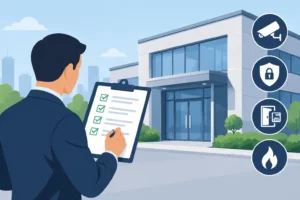
A security weakness rarely announces itself during normal trading hours. It tends to appear when a member of staff leaves a side door unsecured, an alarm activation needs attending at 2am, or a former contractor still has a key. A thorough security audit checklist helps commercial property managers identify these gaps before they become an incident, loss or costly disruption.
For most businesses, the objective is not to add security measures for their own sake. It is to create practical, proportionate protection around people, premises, stock, equipment and sensitive information. The right approach will differ between a busy office, industrial unit, retail site and vacant property, but the principle is the same: understand the risk, confirm who is responsible and make sure procedures work when the building is unattended.
Why a security audit must reflect how your premises operate
A useful audit begins with the reality of the site rather than a generic tick-box exercise. Consider when the premises are busiest, when they are empty, which areas hold valuable assets and how people move through the building. A warehouse with regular lorry deliveries has different vulnerabilities from a healthcare setting, while a multi-let office building may need closer control over visitors, shared entrances and out-of-hours access.
Review recent events as well. False alarms, attempted break-ins, antisocial behaviour, lost keys, staff concerns and repeated access-control faults can all reveal patterns. Minor incidents are often early warnings that a process, physical barrier or response arrangement needs attention.
The audit should also account for operational change. New staff, altered opening hours, building works, changes in tenancy or a move to hybrid working can leave access permissions and security routines behind the curve. Security is most dependable when it is reviewed as part of normal property management, not only after an incident.
Security audit checklist: the core areas to review
Perimeter, entrances and external areas
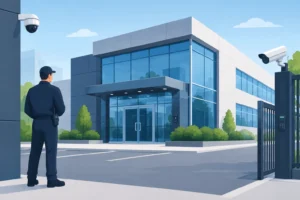
Start outside the building. Inspect fencing, gates, walls, lighting, signage and any point where someone could enter or conceal themselves. Check that gates close and lock properly, perimeter damage is reported promptly and external lighting covers entrances, car parks, loading areas and blind spots without causing unnecessary glare.
Doors and windows deserve close attention. Fire exits must remain compliant and readily usable in an emergency, but they should not become an easy route into the premises. Confirm that door closers, locks, frames, hinges and shutters are in sound condition. Look for propped doors, damaged glazing, unsecured roof access and items left nearby that could assist entry.
Delivery points should have clear controls. Establish where drivers report, whether loading bays can be supervised and how access is restricted when a delivery is not expected. For sites with regular evening activity, a mobile patrol can provide visible reassurance and identify issues such as an open gate or failed light before they escalate.
Keys, access control and visitor management
Keys are a significant responsibility, particularly where several people, contractors or tenants need access. Maintain an up-to-date key register showing what each key opens, who holds it and when it was issued or returned. Lost keys should trigger a documented risk assessment, not simply a replacement key.
Review whether current access arrangements remain appropriate. Former employees, temporary staff and contractors should have access removed as soon as it is no longer required. Where electronic access control is in place, test that permissions, audit trails and time restrictions operate correctly. Physical keys may be suitable for smaller sites, but they require disciplined keyholding procedures and secure storage.
Visitor arrangements should be clear enough for reception staff and consistent enough to be followed at busy times. Record who has entered, who they are visiting and whether they need an escort. Contractors working alone or outside standard hours may require additional checks, site instructions and a named contact.
Alarm systems, CCTV and response arrangements
An alarm system only protects the premises if it is maintained, set correctly and supported by a reliable response plan. Check servicing records, test schedules, keyholder details and procedures for alarm setting and unsetting. Staff should understand how to avoid false activations, but they should also know that an alarm activation must never be treated casually.
Confirm who receives alarm notifications and who is expected to attend. Relying on an employee to leave home in the middle of the night can expose them to unnecessary risk, especially if they do not know what they may encounter. A professional key holding and alarm response service provides a controlled alternative, with trained security personnel attending, assessing the situation and following agreed escalation procedures.
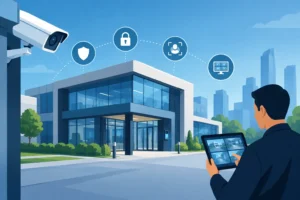
CCTV should be positioned for a clear purpose, such as monitoring entry points, stock areas, vehicle movements or vulnerable external spaces. Check image quality in daytime and low-light conditions, confirm camera views are not blocked and ensure recordings can be retrieved when needed. CCTV is valuable evidence and a useful management tool, but it does not replace physical attendance or a response to an active incident.
Staff routines and site procedures
Security procedures must be practical enough to survive a busy working day. Review open-up and lock-up routines, including who is authorised to complete them and what checks are required. A good lock-up procedure covers doors, windows, alarms, sensitive documents, equipment, lighting and any staff or visitors remaining on site.
Make sure staff know how to report suspicious activity, damage, lost property and security faults. Reports should reach someone who can act, rather than sitting in an inbox until the next working day. Employees should not be expected to challenge aggressive individuals, investigate signs of forced entry or attend alarm activations alone.
Training should cover the risks relevant to the premises. This may include tailgating, social engineering, lone working, secure disposal of documents and the correct handling of keys or access cards. Short, regular reminders are often more effective than a policy document that nobody revisits.
High-risk and vacant areas
Some areas need a separate assessment because their consequences are greater. Server rooms, plant areas, stock cages, medicine stores, cash-handling points and records rooms may need tighter access permissions, enhanced locks or more frequent checks. Consider not only theft but also sabotage, water damage, fire risk and unauthorised use.
Vacant commercial property requires particular attention. Empty buildings can attract trespass, vandalism, fly-tipping, arson and metal theft, while small defects can quickly become expensive claims. Regular vacant property inspections can identify forced entry, leaks, damage and signs of occupation early, helping owners meet insurer expectations and protect the value of the site.
Turn audit findings into a workable action plan
A security audit is only useful when its findings lead to clear action. Record each issue, the risk it creates, the person responsible and a realistic completion date. Prioritise matters that could cause immediate harm or allow straightforward unauthorised access, such as faulty locks, missing keys, failed alarms or insecure perimeter gates.
Not every finding requires major investment. Sometimes the solution is better key control, amended opening procedures, repaired lighting or a clearer visitor process. Other risks may justify a longer-term change, such as upgrading access control, installing additional cameras or introducing scheduled mobile patrols. The right decision depends on the value at risk, the likelihood of an incident, insurance requirements and the level of disruption the business could absorb.
Set a review date once actions are complete. Premises security should be checked at least annually and whenever there is a significant change to the site, workforce or operating hours. Keep records of inspections, maintenance, training and incidents. These demonstrate that security is being actively managed and make future reviews far more effective.
When independent security support adds value
Many facilities teams can complete routine checks internally, but there are situations where an external security partner provides stronger control. This is particularly relevant where keyholders live some distance away, sites operate around the clock, managers oversee several locations or an empty property cannot be checked regularly.
KCS supports commercial clients with key holding, alarm response, mobile patrols, manned guarding, open-up and lock-up services, and vacant property inspections. Using trained, SIA-licensed personnel for response work can reduce pressure on employees while giving the business a dependable plan for out-of-hours events.
The most effective security audit checklist is the one that reflects your actual premises, is acted on promptly and is reviewed before circumstances change. That discipline gives managers clearer control and gives everyone using the building greater peace of mind.