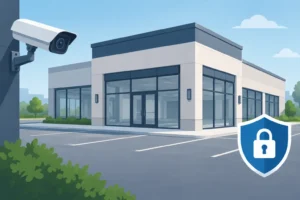
An empty commercial building can become a security concern far sooner than many businesses expect. A vacant property security review gives decision-makers a clear picture of where a site is exposed, what controls are already working and what must be addressed before an incident, claim or costly repair occurs. For facilities and property managers, this is not simply a walk-round. It is a practical assessment of whether the premises can remain protected while no one is there to notice a problem.
Vacancy changes the risk profile of a building. There may be no daily opening and closing routine, no staff presence to spot forced entry, water leaks or fire damage, and fewer opportunities to identify a failed alarm or damaged perimeter. Retail units, offices, warehouses and industrial premises each present different concerns, but all require a proportionate plan for security, safety and regular oversight.
What a Vacant Property Security Review Should Establish
The purpose of a review is to identify vulnerabilities and turn them into accountable actions. It should establish who holds access, how the building is being monitored, what response arrangements are in place and whether the property remains compliant with insurer requirements.
A useful review does not rely on assumptions such as “the alarm is set” or “the landlord checks it occasionally”. It records the condition of the site, tests the arrangements that protect it and confirms who will act when something goes wrong. This matters particularly where a property is between tenants, awaiting redevelopment, subject to probate or temporarily closed due to reduced operations.
Perimeter, access and visible deterrence
The external boundary is the first area to assess. Inspect fencing, gates, doors, roller shutters, windows, roof access points and any neighbouring land that could provide easy entry. Damage that appears minor can create an obvious opportunity to an intruder, especially when a building has no regular footfall.
Access control requires equal attention. Review who has keys, fobs, alarm codes and authority to enter. Keys held by former employees, contractors or previous occupiers are a common weak point. A controlled key register, authorised key holders and a documented process for issuing and returning keys reduce uncertainty at the point it matters most.
Lighting, signage and the appearance of the premises also influence risk. An overgrown entrance, overflowing post or uncollected waste can signal that nobody is attending the site. These are not cosmetic issues. They can attract opportunistic trespass, theft, fly-tipping and vandalism.
Alarm, CCTV and response arrangements
An alarm system is only effective if it is maintained, set correctly and supported by a reliable response plan. The review should confirm the system’s condition, the alarm receiving centre arrangements, the current call-out list and whether nominated key holders can attend safely and promptly.
It is worth considering whether staff should be expected to attend alarm activations at all. A late-night activation may involve uncertain circumstances, and asking an employee to enter a dark, potentially compromised property can expose them to unnecessary risk. Professional key holding and alarm response provides a controlled alternative, with licensed personnel able to attend, assess the situation and liaise with emergency services where required.
CCTV can be a valuable deterrent and source of evidence, but it should not be treated as a substitute for physical security or response. Cameras must be positioned effectively, recording equipment must be operational, and footage retention needs to meet the property’s needs. A camera pointed at a poorly secured rear door does not prevent entry on its own.
Safety, building condition and hidden damage
Security and building condition are closely connected during vacancy. A broken window, failed drain, leaking roof or insecure plant room can create escalating costs if left unattended. Water damage is particularly disruptive because it can spread unnoticed through offices, stock areas and electrical systems.
The review should consider fire safety measures, utilities, hazardous materials, vacant plant, waste storage and any areas vulnerable to weather damage. Depending on the length of vacancy and the building’s use, it may be appropriate to isolate non-essential services, maintain heating at a minimum level or introduce more frequent inspections during cold weather.
Insurance policies often impose specific conditions for unoccupied premises, including minimum inspection frequencies, alarm requirements and restrictions on water systems. These conditions vary, so businesses should check the policy wording rather than assume that standard occupied-property cover continues without change. Failing to meet a vacancy condition can complicate a claim at precisely the point protection is needed.
How to Carry Out a Vacant Property Security Review
A disciplined review should combine an on-site inspection with a check of the documents and people behind the arrangements. Begin by confirming the property’s current status: how long it has been empty, whether any contractors require access, what assets remain inside and when the next change of use is expected.
Then work through the site in a consistent order. The following checks provide a practical starting point:
- Inspect the full perimeter, including gates, fencing, external doors, windows, roof access and service yards.
- Test the practical operation of locks, shutters, intruder alarms, CCTV and external lighting.
- Reconcile keys, fobs, alarm codes and authorised contacts, removing access that is no longer required.
- Check for signs of forced entry, trespass, water ingress, fire risk, waste accumulation or deterioration.
- Record actions, assign responsibility and set a date for the next visit or patrol.
Photographs and written findings create an audit trail. They also make it easier to show insurers, landlords, directors or managing agents that reasonable steps have been taken. If a defect cannot be repaired immediately, it should be documented alongside an interim control, such as temporary boarding, increased patrols or a revised response instruction.
Frequency depends on the property and its surroundings. A small, well-secured office in a busy location may need a different regime from an isolated warehouse containing valuable equipment. Higher-risk sites may require regular mobile patrols, scheduled vacant property inspections and random attendance times to avoid predictable patterns.
Match Security Measures to the Actual Risk
There is no single vacant-property package that suits every building. Over-specifying security creates unnecessary cost, while under-specifying it leaves a business exposed. The right approach is based on the property’s location, condition, value of remaining assets, duration of vacancy, history of incidents and insurance obligations.
For a short vacancy, controlled key holding, alarm response and scheduled checks may be enough. For longer periods, businesses may need mobile patrols, open-up and lock-up support for contractors, regular inspection reports and visible deterrents. Where there is a known threat, repeated trespass or high-value stock on site, manned guarding may be justified for a defined period.
Controls should also adapt as circumstances change. A building awaiting refurbishment can become more vulnerable once contractors begin arriving, materials are delivered or access points are opened. The review should be revisited after a break-in, severe weather event, change in tenant status or alteration to the alarm and access-control system.
Choosing a Dependable Security Partner
Outsourcing vacant property protection is often the most practical option when internal teams do not have the capacity or expertise to provide round-the-clock cover. The provider should have clear escalation procedures, trained and actively licensed officers, reliable reporting and the ability to respond outside normal working hours.
Accreditation offers useful reassurance, but operational detail matters too. Ask how incidents are reported, who can authorise emergency works, how keys are stored and audited, and what happens if the primary contact cannot be reached. A good provider will help define these arrangements before the first alarm activation rather than during one.
Key Control Services supports commercial clients with key holding, alarm response, mobile patrols and vacant property inspections, backed by SIA Approved Contractor Status and ISO 9001:2015 quality accreditation. For businesses across Greater Manchester managing empty premises, that means practical protection without placing employees in a position they should not be asked to handle.
A vacant building does not need to become an unmanaged risk. A clear review, documented responsibilities and dependable attendance arrangements give property managers the confidence that someone is watching over the site, even when it is empty.