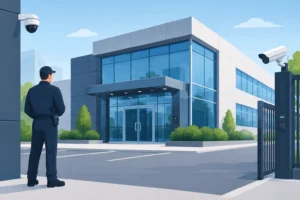
An empty commercial property can deteriorate from a manageable liability into a costly incident quickly. When considering vacant inspections versus remote monitoring, the right decision is not simply about choosing physical patrols or technology. It is about understanding what risks the property faces, how rapidly they need to be identified, and whether someone can take meaningful action when something is wrong.
For offices, retail units, industrial sites and development properties, a period of vacancy can attract trespass, theft, vandalism, fly-tipping and attempted arson. Water leaks, storm damage and fire panel faults can also escalate when there is nobody on site. A dependable protection plan needs to provide visibility, response and a clear audit trail.
What vacant property inspections provide
Vacant property inspections are planned physical visits by trained security personnel. An officer attends the premises at agreed intervals, checks the building and surrounding grounds, identifies signs of damage or unauthorised access, and records findings for the property owner or managing agent.
A proper inspection goes beyond confirming that a door is closed. It should consider the condition of access points, windows, fencing, shutters and external lighting. The officer can look for evidence of forced entry, vandalism, water ingress, damage to the roofline, dumped waste or people attempting to occupy the building. They can also check that fire doors remain secure, utilities appear safe and no obvious hazards have developed.
This physical presence has a deterrent value that technology alone cannot always match. Regular, visible attendance signals that a property is being actively managed. It can be particularly valuable for premises in isolated industrial locations, properties with a history of intrusion, or buildings where access routes and vulnerable areas cannot be fully covered by cameras.
For insurers and stakeholders, documented inspections can also demonstrate reasonable care. The exact requirements vary by policy and property type, but many vacant-property insurance arrangements expect periodic checks and prompt reporting of defects. Inspection reports create evidence that the site has not been left unmanaged.
Where inspections have limits
An inspection only shows what is happening at the time of the visit. If an intruder enters shortly afterwards, or a pipe bursts overnight, the issue may remain undetected until the next scheduled attendance. Increasing visit frequency reduces this exposure, but it also increases cost.
Physical inspections are therefore strongest when they are planned around the property’s risk profile. A low-risk, short-term vacancy may require occasional checks. A vacant warehouse holding plant, materials or valuable fixtures may need frequent inspections, mobile patrols and an alarm response arrangement.
What remote monitoring provides
Remote monitoring uses connected CCTV, intruder alarms, access-control alerts and other detection systems to identify events away from the site. Depending on the system, a monitoring centre may receive an alarm activation, review live or recorded images, assess whether a genuine threat is present and arrange an appropriate response.
Its main advantage is speed. Rather than waiting for the next inspection, an alarm or camera alert can draw attention to suspicious activity as it happens. Remote monitoring is particularly effective at covering perimeters, entry points, yards, loading areas and other locations where movement should be unusual outside working hours.
Modern monitored systems may include audio challenge capability, allowing operators to issue a warning to intruders through speakers. In some circumstances, this is enough to stop an opportunistic attempt before damage occurs. Where the risk remains, a mobile response officer or emergency service can be contacted under the agreed escalation procedure.
Remote monitoring also gives facilities teams a wider view across multi-site portfolios. A property manager responsible for several vacant units may receive event records and incident information without needing to arrange attendance at every alert personally. This supports better oversight while avoiding unnecessary risk to employees.
Where remote monitoring has limits
Technology is only as reliable as its design, installation and ongoing maintenance. Cameras need suitable positioning, lighting and network connectivity. Alarm signals need a clear response protocol. A camera may identify movement, but it cannot repair a damaged fence, secure a broken window or inspect a basement for water damage.
False alarms must also be managed carefully. Poorly configured detection can produce frequent activations from wildlife, weather or environmental changes. This can create alert fatigue and unnecessary call-outs. A professionally assessed system with active monitoring and defined escalation procedures is far more effective than a collection of cameras that nobody is watching.
Remote monitoring may also be less suitable as the sole measure where a building has complex internal areas, blind spots, significant maintenance concerns or a known trespass issue. It identifies many threats quickly, but it does not replace the reassurance of someone physically checking the premises.
Vacant inspections versus remote monitoring: the practical difference
The most useful distinction is straightforward: remote monitoring helps identify an event in real time, while vacant inspections help verify the overall condition and security of a site.
Monitoring answers questions such as: Is someone climbing the gate? Has an alarm activated? Is there movement at the rear entrance? Inspections answer different questions: Has the fence been cut? Is a window beginning to fail? Has rainwater entered through a damaged roof? Is waste accumulating against the building?
Neither service is automatically better. The choice depends on the nature of the vacancy and the consequences of an incident remaining unnoticed.
A vacant town-centre retail unit with valuable internal fixtures may benefit from monitored intruder detection and cameras, backed by scheduled physical checks. A small, empty office awaiting refurbishment may need routine inspections to meet management and insurance obligations, particularly if the building is secure and has limited external exposure. A large warehouse or industrial estate often warrants a combined approach because it has extensive perimeter risks as well as internal and maintenance vulnerabilities.
When a combined approach offers better protection
For many commercial properties, the strongest arrangement is not vacant inspections versus remote monitoring as an either-or decision. It is a layered plan that uses each service for what it does best.
Remote monitoring can provide immediate awareness of alarm activations and suspicious activity at any hour. Planned inspections can identify gradual deterioration, test whether physical controls remain effective and deal with concerns that cameras cannot fully assess. Mobile patrols can add unpredictable visible presence, while key holding and alarm response ensure an authorised, trained officer can attend when an incident requires action.
This layered approach is especially valuable when a property will remain vacant for months, when ownership is changing, or when refurbishment work is paused. Vacant buildings can look secure at the start of a project but become more exposed as contractors move materials, access arrangements change and temporary barriers degrade.
KCS can help commercial property managers set a proportionate plan around inspection frequency, key holding, mobile response and monitored security requirements, rather than applying the same level of cover to every building.
Factors to assess before choosing a service
Start with the likely threat, not the product. A site in an area with repeated trespass or theft needs a different response from a well-secured office empty for a few weeks. Consider the value of remaining assets, the cost of disruption, the ease of access, the condition of the building and any requirements set by insurers, landlords or lease agreements.
You should also consider how quickly action is needed. If an unauthorised entry must be challenged immediately, monitoring and alarm response are likely to be central to the plan. If the principal concern is deteriorating building condition, compliance evidence or general oversight, regular inspections may take priority.
Operational arrangements matter too. Decide who receives reports, who is authorised to approve emergency works, and what should happen if an officer finds damage or an open access point. Security works best when response responsibilities are agreed before an incident occurs, not while a manager is trying to locate keys late at night.
Build protection around the real risk
A vacant property should never be treated as a dormant one. The longer it is empty, the more valuable timely information becomes. Choose remote monitoring where immediate detection is essential, choose inspections where physical verification is required, and combine both where the potential cost of a missed incident is too high.
A clear security plan, accurate records and a trusted response partner give property managers something more useful than a basic checklist: confidence that an empty building is still being properly protected.