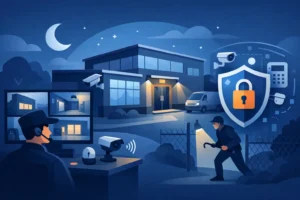
A 02:00 alarm activation, an unsecure fire exit or a vacant unit with signs of entry can quickly become a management problem. Knowing how to outsource premises security means putting a trained, accountable response in place before an incident asks an employee, director or keyholder to attend alone.
For commercial premises, outsourced security is not simply about placing a guard at a door. It is about deciding who holds access, who responds when systems activate, how the site is checked, and how every action is recorded. The right arrangement protects people as well as property, while giving your business dependable cover outside normal working hours.
Start with the risks at your premises
A security provider can only design an effective service when it understands the site, its operations and its likely points of failure. Begin by reviewing what needs protection: buildings, stock, equipment, confidential information, keys, staff and visitors. Then consider when those risks are greatest. A distribution site may need particular attention overnight and at weekends, while an office may be more exposed during holiday closures or after a change in occupancy.
Look beyond obvious threats such as break-ins. Repeated false alarms, unsecured access points, lone-working concerns, vandalism, fly-tipping and water leaks can all require a prompt physical response. Vacant buildings also carry different risks from occupied premises, including illegal entry, deterioration and insurance conditions that require regular inspections.
It helps to map out practical questions before approaching suppliers. Who currently receives alarm calls? How far do they live from site? Are they trained to assess an incident safely? Which areas require authorised access? Is there a documented procedure for opening, locking up or admitting contractors? Clear answers will expose gaps that outsourced security can address.
Choose the level of outsourced protection you need
Outsourcing does not have to mean a full-time static guard. The best model depends on your risk profile, operating hours, site layout and budget. Many organisations combine services so that security cover reflects the way the premises are actually used.
Key holding and alarm response is often the foundation. The provider securely retains keys or access credentials and sends a licensed officer to investigate alarm activations. This removes the expectation that an employee or business owner must travel to site in the middle of the night, potentially into an uncertain situation. Following an agreed procedure, the officer can assess the exterior, liaise with emergency services or alarm engineers, reset systems where appropriate and secure the property.
Mobile patrols add visible, irregular checks at agreed times. They can deter opportunistic activity and identify issues such as damaged fencing, open gates or unsecured doors before they escalate. Open-up and lock-up services are useful where staff should not be responsible for early or late access, while manned guarding may be appropriate for higher-risk locations, busy receptions, construction sites or premises with regular visitor movement.
For empty commercial buildings, planned vacant property inspections provide evidence that the site is being monitored. The inspection frequency should reflect the property’s condition, location, insurer requirements and the value of assets left inside.
Set clear responsibilities before you outsource
Security contracts work best when expectations are specific. Your provider needs an up-to-date set of instructions, but those instructions should be practical enough to use during an incident. This is commonly called site assignment instructions or a site manual.
It should confirm who can authorise access, the order in which contacts are called, alarm codes where relevant, emergency-service arrangements, key locations and areas that require special attention. Include hazards such as electrical rooms, plant equipment, restricted storage, lone workers or known structural concerns. If a response officer cannot safely enter a building, the procedure should state what happens next.
Decide in advance what the provider can authorise. For example, can they call an emergency locksmith, request an alarm engineer, arrange temporary boarding or remain on site after a break-in? Define financial limits and named decision-makers for out-of-hours approval. This avoids delays when fast action is needed.
Your internal team still has a role. Keep the provider informed when staff leave, locks change, alarms are upgraded, opening hours alter or areas become vacant. An old key list or outdated contact number can undermine an otherwise well-run service.
Check licensing, accreditation and operational standards
Premises security involves access to sensitive areas, keys and business information. Price matters, but it should not be the only deciding factor. Ask prospective suppliers how they recruit, vet, train and supervise officers, and how they protect keys and client data.
For UK contract security, check that relevant operational staff hold active Security Industry Authority licences. SIA Approved Contractor Status is a valuable indicator that a supplier has been independently assessed against recognised standards. ISO 9001:2015 certification can also demonstrate a structured approach to quality management, records and continual improvement.
Ask how the provider manages response performance. A credible supplier should be able to explain its control room arrangements, escalation procedures, reporting process and cover for staff absence. If your premises operate across Greater Manchester or further afield, clarify whether the provider uses its own trained teams, how local response is maintained and who remains accountable for the service.
References and experience in comparable environments are worth examining too. An industrial estate, healthcare setting, retail unit and managed office block each present different access, safety and reporting requirements. The provider should understand those differences rather than applying a generic plan.
Agree what happens after an incident
The value of outsourced security is measured most clearly after an activation or site concern. You should know what information will be provided, how quickly it will arrive and what action will be recommended.
A useful incident report records the time of attendance, observations, actions taken, people contacted and any follow-up needed. Photographs may be appropriate where damage or insecure access has been found. The report should distinguish facts from assumptions, helping managers make sound decisions and maintain an audit trail for insurers, landlords or internal compliance teams.
Discuss common scenarios before the contract begins. If an alarm is false, who resets it and who reports recurring faults? If there is evidence of forced entry, does the officer wait at a safe distance for police attendance? If a door cannot be secured, can the provider arrange guarding or emergency repairs? Planning these details is what turns a security service into a dependable operational safeguard.
Build reporting into the service
Outsourcing should provide greater visibility, not less. Set a regular review schedule, particularly during the first months of the contract. Review alarm activations, patrol findings, response issues, recurring maintenance faults and any changes to the premises.
Patterns matter. Several activations at one access point may indicate an alarm fault, a training issue or an emerging security weakness. Repeated unsecured doors may call for a change in closing procedures. A provider that shares meaningful reports can help you address the cause rather than repeatedly responding to the symptom.
For multi-site organisations, consistent reporting also makes it easier to compare risks and performance across the estate. Ask for reporting that is clear enough for facilities teams to use, but detailed enough to support senior management, insurers and compliance requirements.
Manage the transition carefully
The handover period deserves attention. Arrange a site survey, transfer keys through a documented process, test alarm-response instructions and make sure all emergency contacts are correct. Brief relevant employees so they know who to call, what the provider will handle and when they should not attend site themselves.
Do not treat the arrangement as permanent once it is signed. Review it after changes such as a refurbishment, new tenant, reduced occupancy, extension of operating hours or a security incident. Security needs change with the business and the property.
KCS has protected commercial premises since 1998 through services including key holding, alarm response, mobile patrols, manned guarding and vacant property inspections. For any provider, the essential test is the same: can it demonstrate trained people, disciplined procedures and reliable accountability when your premises need attention most?
A well-chosen security partner gives your team space to focus on running the business, while trained professionals take responsibility for the difficult out-of-hours decisions. That peace of mind starts with a clear brief, proven standards and a service plan built around your site rather than a standard package.