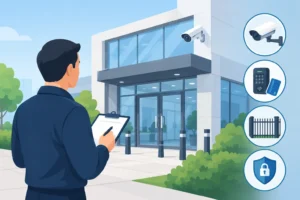
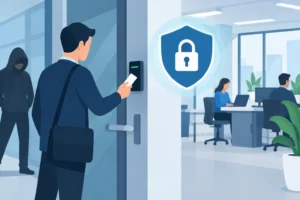
At 2.17am, an alarm signal at an empty warehouse or office is not a task that should fall to a director, caretaker or member of the admin team. A professional Bolton alarm response service gives commercial premises a trained, licensed responder who can attend, assess the situation and take the right next step without placing your people at unnecessary risk.
For businesses, an alarm activation can mean many things. It may be a genuine attempted intrusion, accidental damage, a fault in the system, environmental disruption or a false alarm. The uncertainty is precisely why a controlled response process matters. Whoever attends needs the authority to access the building, the judgement to identify immediate risks and the discipline to protect the site until it is secure.
What a Bolton alarm response service should deliver
Alarm response is more than arriving at a property after a monitoring station has raised an alert. It is a practical security service built around accountable access, clear communication and reliable attendance.
A professional provider holds authorised keys or access credentials securely and responds when an agreed alarm signal is received. On arrival, the security officer checks the external condition of the premises, looks for signs of forced entry or damage, and follows the site-specific instructions agreed with the client. If there is evidence of a crime, the police may be contacted. If the issue is a fault, the nominated alarm engineer or maintenance contact can be called.
The key point is that the client has a controlled response in place at any hour, rather than relying on an unprepared employee to make decisions alone. This protects staff welfare while helping the business preserve evidence, prevent further loss and restore security as quickly as circumstances allow.
An alarm signal is not always a break-in
False alarms are common, but they still need careful treatment. A fault, power interruption, loose door contact or environmental issue can trigger a system. Assuming an activation is harmless can expose a business to avoidable loss; treating every activation as an emergency without a process can create cost and disruption.
The appropriate response is proportionate. A trained officer can check the premises, document what has been found and escalate only where necessary. That balance is particularly valuable for sites with frequent out-of-hours activity, complex access arrangements or equipment that must remain protected around the clock.
Why businesses should not rely on staff keyholders
Many organisations initially nominate employees as keyholders because it appears straightforward. In practice, it transfers considerable responsibility to people who may have no security training, no safe means of attending alone and no obligation to be available outside working hours.
There are welfare concerns too. A staff member arriving at a dark, isolated site after an alarm activation may encounter an intruder, damaged access points or a hazardous condition. Even where nothing is wrong, repeated late-night call-outs can affect morale, fatigue and retention.
An outsourced response arrangement creates clearer boundaries. Employees can focus on their core roles, while a security provider handles access, attendance and incident management under agreed instructions. For facilities and operations managers, this also avoids the annual challenge of keeping staff contact details, key records and escalation lists accurate as personnel change.
What happens after an activation?
The exact procedure should reflect the site, its risks and the alarm system in place. However, a dependable service usually follows a disciplined sequence.
First, the activation is received and assessed against the agreed response instructions. A licensed officer is deployed to the premises with the necessary keys or access information. On arrival, they carry out a visual inspection and investigate in line with the site’s risk profile.
If there is an immediate threat, the officer follows the appropriate escalation process. This can include notifying the police, contacting an alarm engineer, arranging emergency boarding or requesting further security support. If the property cannot be safely left unattended, temporary guarding may be needed until a door, shutter, window or alarm system is repaired.
Once the situation is stable, the client receives a clear report. This should record attendance, observations, actions taken and any follow-up required. Good reporting is not an administrative extra. It enables managers to identify recurring faults, evidence incident handling and make informed decisions about maintenance or wider security improvements.
Choosing the right alarm response provider in Bolton
Not all key holding arrangements provide the same level of assurance. Commercial decision-makers should look beyond a simple promise to attend and consider how the service will operate when a real incident occurs.
Ask how keys are controlled, transported and audited. Confirm that officers hold active SIA licences and that the provider has a formal process for escalation, incident reporting and out-of-hours communication. Approved contractor status and recognised quality accreditation provide additional reassurance that operational standards are subject to external scrutiny.
Local knowledge can matter, particularly where response routes, industrial estates or multi-site operations are involved. However, proximity alone is not enough. A provider must have sufficient operational depth to respond consistently during holidays, severe weather, peak demand and unforeseen incidents. The best arrangement combines local responsiveness with proven procedures and reliable management oversight.
It is also worth reviewing whether alarm response should sit alongside other services. A vacant unit may benefit from scheduled inspections and mobile patrols. A busy office could require open-up and lock-up support. A warehouse with a damaged perimeter may need temporary guarding after an incident. Integrating these services under one security plan can reduce gaps between detection, response and recovery.
Site instructions make the difference
The effectiveness of a Bolton alarm response arrangement depends heavily on the information supplied before the first call-out. Site instructions should be specific enough to guide a responder under pressure, without becoming so complicated that they are difficult to use.
This normally includes authorised contacts, access arrangements, alarm panel details, known hazards, utility information, key locations, preferred contractors and instructions for contacting emergency services. It should also define who can authorise expenditure for emergency repairs and what action is required if the building cannot be re-secured.
These instructions need regular review. A new tenant, changed gate code, relocated key safe, altered loading schedule or replacement alarm system can all affect the response. Treating this documentation as a live operational record prevents delays when time matters most.
The value of professional key holding
Key holding is central to alarm response because it removes the need for a member of staff to carry responsibility for building access at all times. Keys should be managed through a secure, traceable process, with access limited to authorised personnel and records maintained for collections and returns.
For businesses with multiple premises, key holding also provides consistency. Rather than relying on different staff members at each site, managers have one agreed procedure and one reporting route. That can simplify compliance, strengthen accountability and make it easier to maintain standards across a wider estate.
KCS has provided professional security support since 1998, combining key holding, mobile response and property protection services with SIA Approved Contractor Status and ISO 9001:2015 quality accreditation. For clients, those credentials support a service built for high-responsibility situations, not an informal call-out arrangement.
Protecting continuity as well as property
The cost of an alarm incident is not limited to stolen stock or physical damage. A compromised site can delay opening, disrupt deliveries, stop production, affect staff confidence and create a difficult conversation with insurers, landlords or customers. Prompt attendance helps contain the immediate problem, but the wider benefit is operational continuity.
A planned service also gives decision-makers more control. They know who will attend, how incidents will be escalated and what information they will receive afterwards. That certainty is valuable whether the property is an office, retail unit, healthcare environment, industrial facility or an empty commercial building awaiting sale or redevelopment.
Before the next activation tests your arrangements, review who currently holds the keys, who would attend at night and whether they have the training, authority and support to do so safely. A professional response plan gives your business a calmer, safer route through an otherwise uncertain moment.