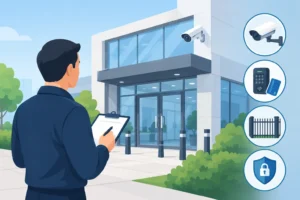
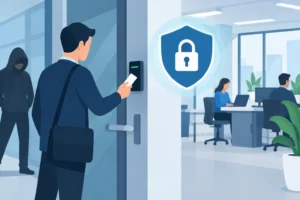
The last person leaving a commercial premises is often carrying more responsibility than they realise. A missed fire door, an unsecured side gate or a set of keys left in the wrong place can create an avoidable opportunity for intrusion, theft or damage. This business lock up checklist helps managers put a consistent, accountable end-of-day procedure in place.
A good lock-up is not simply about turning a key and setting an alarm. It is a controlled process that protects people, stock, equipment, confidential information and the building itself. For businesses with multiple exits, changing shift patterns or several sites, clear procedures are essential.
Why a consistent lock-up procedure matters
Many security failures occur during ordinary routines. A staff member may assume somebody else has checked the storeroom, locked the rear entrance or armed the alarm. At a busy office, retail unit, warehouse or industrial site, those assumptions leave gaps.
A documented procedure gives every authorised closer a clear sequence to follow. It also provides an audit trail when something does go wrong, helping managers establish whether a fault, a process failure or unauthorised access was involved. This is particularly valuable where insurers, landlords, health and safety teams or compliance officers require evidence of effective site control.
The detail should reflect the site. A small office may only need a short process, while a manufacturing facility with external storage, loading bays and hazardous materials needs more checks. The principle remains the same: every area is checked, every access point is secured, and every exception is reported.
Business lock up checklist: before staff leave
Locking up should begin before the final person reaches the front door. Staff need enough time to close the site properly rather than rushing to leave at the end of a long shift.
First, confirm who remains in the building. Check offices, toilets, meeting rooms, kitchens, storage rooms, workshops and any isolated areas. Visitors, contractors and lone workers should have signed out or been accounted for. Where people work late regularly, agree an escalation process so they can confirm their safe departure.
Confidential information also needs attention. Paper records should be stored in locked cabinets where required, while laptops, tablets, cash floats, keys and portable equipment should not be left visible or accessible. Open windows and unsecured internal doors can undermine an otherwise sound perimeter, particularly in ground-floor or shared-access areas.
Before the alarm is set, check that no equipment creates an unnecessary fire, safety or security risk overnight. This may include switching off non-essential electrical items, securing chemicals or tools, and ensuring fire exits are clear. Do not lock fire exits in a way that compromises emergency escape arrangements when people are still on site.
Secure the building from the inside out
A reliable approach is to work through the premises in a fixed order. Starting at the furthest point from the final exit reduces the chance that a door or room is overlooked. Staff should avoid relying on memory alone, especially where responsibilities are shared across a team.
The following checks are appropriate for many commercial premises:
- Close and secure all windows, skylights, shutters and internal access doors, including those in stockrooms, plant rooms and communal areas.
- Check external doors, loading bays, gates, roller shutters and perimeter fencing for damage, obstruction or signs of attempted entry.
- Remove cash, high-value goods and sensitive equipment from public view, then secure them in the designated location.
- Confirm that keys, access fobs and alarm-setting devices are held securely and have not been left in vehicles, drawers or unattended reception areas.
- Record any defect, such as a faulty lock, damaged fence panel or alarm warning light, and report it through the agreed channel immediately.
Physical checks matter because electronic security is only one layer of protection. An alarm may alert somebody to a break-in, but a locked, well-maintained building can deter an attempted entry or delay an intruder long enough for a response to be arranged.
Set the alarm correctly and verify it is armed
Alarm setting is a critical point in any lock-up procedure. The authorised keyholder should understand the system, know which zones are included and be able to recognise a fault indication. Simply entering the code and leaving does not always mean the system has armed successfully.
Wait for the confirmation signal specified for the site. Depending on the system, this may be an audible tone, a panel message, an indicator light or confirmation through an approved monitoring arrangement. If the alarm will not set, do not bypass the issue without authority. Check for obvious causes such as an open door, movement in a protected area or a zone that has not cleared, then follow the documented escalation process.
A recurring alarm fault deserves attention, even if staff have found a temporary workaround. Repeated false activations can lead to complacency, disrupt operations and create uncertainty when a genuine activation occurs. Prompt maintenance and accurate incident reporting protect the effectiveness of the wider security plan.
Manage keys and access responsibility
Keys are a direct route into the premises, so their management should be treated as seriously as the locks they operate. Keep an up-to-date key register showing who is authorised to hold keys, fobs, alarm codes or remote-setting devices. Review that register when staff change roles or leave the organisation.
Avoid placing business keys in labelled cabinets, hiding them on site or allowing staff to take them home without a controlled process. If keys are lost, the response should be proportionate to the risk. A lost internal cupboard key may require a different response from a lost master key that provides access to the building, alarm system or restricted areas.
For many organisations, outsourced key holding removes a significant burden from employees. Rather than asking a manager to attend alone following an alarm activation in the early hours, an appropriately licensed security provider can hold keys securely and attend under agreed instructions. KCS supports commercial clients with key holding, alarm response and lock-up services designed to reduce that exposure.
What to do when something is not right
The final person leaving should never feel pressured to investigate a suspicious situation alone. Signs of forced entry, an unfamiliar vehicle, a damaged gate, unexplained noise or an alarm fault can all require a controlled response.
Move to a safe position, avoid entering a potentially compromised building and follow the site escalation plan. This may involve contacting the police in an emergency, notifying the nominated keyholder, or arranging a mobile security response. Preserve any relevant information, such as the time, location, description of damage and CCTV coverage, but do not place staff at risk to gather it.
A well-written procedure should state who makes decisions outside normal hours. It should include current contact details, the circumstances in which an alarm receiving centre or security provider is contacted, and arrangements for keeping senior management informed. Review these instructions regularly. An out-of-date telephone number is no help at 2am.
Assign ownership and prove the process works
A checklist only adds value when people use it. Assign named authorised closers for each shift, with suitable cover for holidays, sickness and unexpected absences. They should receive practical training on access control, alarms, emergency procedures and reporting requirements.
Consider using a simple signed log, digital report or patrol verification record to show that checks were completed. The right method depends on the size and risk profile of the operation. A single independent shop may need a straightforward daily record; a multi-site organisation may benefit from central reporting, timed patrols and exception alerts.
Managers should periodically test the procedure rather than assuming it is being followed. Review incident reports, inspect vulnerable areas after dark and check whether staff can explain what to do if an alarm will not set. If changes are made to the premises, such as a new storage area, additional entrance or altered working hours, update the checklist at the same time.
When professional lock-up support is the better option
There is a trade-off between keeping lock-up duties in-house and outsourcing them. In-house arrangements can suit low-risk premises with reliable opening hours and trained staff. However, they may leave a business dependent on a small number of keyholders, expose employees to lone-working risks and create problems when shifts overrun.
Professional open-up and lock-up services can provide consistency across sites and reduce the pressure on managers. Mobile patrols can add visible reassurance outside normal hours, while alarm response and vacant property inspections offer further protection where premises are unoccupied or particularly vulnerable.
The right arrangement should be based on the site’s risk assessment, insurer requirements, local crime concerns, the value of assets and the consequences of operational downtime. What matters is that responsibility is clear and the response is dependable.
A lock-up routine should leave no uncertainty about who is safe, what is secure and who will respond if the unexpected happens. Put the process in writing, train the people responsible and review it before a small gap becomes a serious incident.