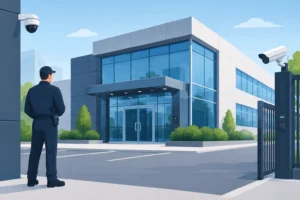
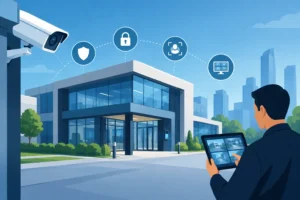
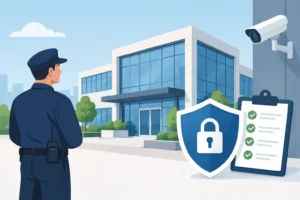
An alarm activation at 2.15am is not a routine facilities task. It may be a false alarm, but it could also indicate an attempted break-in, damage, fire risk or a vulnerable access point. A professional office alarm response service ensures a trained, licensed security officer attends the premises, assesses the situation and takes controlled action without placing employees or managers in harm’s way.
For businesses responsible for offices, commercial units and multi-site estates, the issue is bigger than receiving an alarm notification. It is about having someone accountable, available and properly equipped to respond at any hour.
Why office alarm response needs a professional plan
Many businesses initially nominate a director, office manager or facilities colleague as their key holder. This can appear cost-effective, particularly for a smaller office. Yet it transfers a serious out-of-hours responsibility to people whose role is not security and who may have little knowledge of responding to an uncertain incident.
A key holder arriving alone at a dark or isolated building may face an intruder, unsecured doors, broken glass or a confrontation with someone on site. Even where no crime has occurred, an employee may spend hours dealing with police, alarm engineers and the task of making the premises secure before the next working day.
Professional response arrangements remove that exposure. The responding officer attends in accordance with agreed instructions, liaises with emergency services where required and records what has happened. Your team can be kept informed without being expected to attend every activation.
This also gives decision-makers a clearer chain of responsibility. Instead of relying on an informal phone tree when an alarm goes off, the monitoring centre contacts the nominated security provider, which follows a documented response process.
What happens when an office alarm is activated?
The exact procedure depends on the alarm system, monitoring arrangements and site-specific instructions. A quality response should never be a one-size-fits-all visit. An office containing confidential records, high-value equipment or controlled stock will require different priorities from a small serviced office.
Once an activation is received, the security provider dispatches an officer to the premises. On arrival, they carry out an external assessment before entering where it is safe and appropriate to do so. They check likely points of entry, look for signs of damage or unauthorised access, and establish whether the building can be secured.
If there is evidence of a crime, the officer will support police attendance and preserve the situation as far as practical. If the alarm has been triggered by a fault or environmental issue, they can provide access for an authorised engineer under your agreed instructions. Where the alarm is false, the officer still checks that the site is secure before leaving.
Following attendance, the client should receive a clear incident report. This matters because the report creates an auditable record for management, insurers and any follow-up action. It should explain the activation, observations made, actions taken and whether further work is needed.
The value of site instructions
Good alarm response begins before the first call-out. Site instructions should identify access arrangements, alarm panel information, emergency contacts, areas of particular concern and approved actions for common situations. They should also make clear who can authorise repairs, boarding-up or other costs if urgent work is necessary.
Instructions need reviewing when the office layout changes, a tenant moves in or out, access codes are updated, or key personnel leave the business. An out-of-date contact list can create unnecessary delay at precisely the point when a prompt decision is required.
Key holding and alarm response work better together
An alarm response service is strongest when delivered alongside secure key holding. The provider holds your keys or access devices under controlled conditions and makes them available only for authorised operational use. That avoids asking staff to take keys home, share them between colleagues or leave them in insecure locations.
There is a practical benefit during an activation: the attending officer already has approved access and does not need to wait for a member of staff to travel to site. This can reduce the period in which a door, shutter or alarm fault leaves the building exposed.
Key control is not simply about possession of a set of keys. It requires disciplined handling, clear records and procedures that protect access to sensitive premises. For offices with server rooms, client information, specialist equipment or multiple occupants, those controls are central to the overall security arrangement.
Choosing the right response level for your premises
Not every office needs the same service specification. A single, occupied town-centre office may have different risks from a detached headquarters, industrial office, medical practice or vacant commercial building. The right approach depends on the building’s location, hours of use, asset profile, previous incidents and the consequences of disruption.
For some sites, alarm response is the core requirement. Others benefit from mobile patrols that provide visible checks overnight, open-up and lock-up support to ensure the premises are secured correctly, or a manned guarding presence during periods of elevated risk.
Consider how your arrangement handles four practical questions:
- Who responds if an alarm activates outside working hours or during a bank holiday?
- How quickly can an authorised person reach the premises with the correct access?
- What authority does the responder have to contact police, request an engineer or arrange emergency securing work?
- How will your business receive confirmation that the property is safe, or understand what action is required next?
The answer should be documented, not assumed. It is also worth checking whether your insurer has key holder or alarm response expectations, especially where the premises contain high-value assets or are unoccupied for extended periods.
Accreditation, licensing and accountability matter
Alarm response involves access to client property at sensitive times. Businesses should be careful about who they appoint. Look for a provider with active SIA-licensed personnel, clear vetting and training arrangements, and a recognised commitment to quality management.
SIA Approved Contractor Status is a useful indicator that a security business has been independently assessed against industry standards. ISO 9001:2015 accreditation provides further reassurance that procedures, service quality and continual improvement are treated seriously. Credentials do not replace good communication or local operational capability, but they help demonstrate that the provider works to accountable standards.
It is also sensible to ask how incidents are logged, who supervises out-of-hours activity and how service performance is reviewed. A response provider should be able to explain its escalation process in plain terms rather than relying on vague promises of availability.
KCS has protected commercial premises since 1998, combining key holding, alarm response and mobile security services with SIA Approved Contractor Status and ISO 9001:2015 quality accreditation.
Reducing false alarms without reducing protection
False activations are common, but they should not be dismissed as merely inconvenient. Repeated call-outs can disrupt staff, create unnecessary cost and make it harder to identify a genuine pattern of risk. The answer is not to weaken alarm coverage. It is to investigate why activations are happening.
Common causes include poorly maintained sensors, changes in heating or airflow, pests, cleaning staff entering without the correct procedure, and access errors at the end of the day. Regular alarm maintenance, clear lock-up routines and sensible staff training can reduce avoidable activations.
A professional officer’s incident reports can help identify recurring issues. If the same door contact triggers repeatedly, or alarms occur shortly after cleaners visit, management has evidence to address the cause rather than guessing.
Protecting people as well as property
The greatest benefit of outsourced response is often overlooked: it protects your people. No office manager should feel obliged to investigate an alarm alone, and no director should have to decide whether a late-night call-out is safe while trying to run the business the next morning.
A well-managed service protects the building, but it also preserves business continuity. It gives the organisation a controlled route for dealing with alarm incidents, access problems and emergency attendance while keeping staff out of unnecessary risk.
If your current arrangement depends on a colleague answering the phone and driving to site, review it before the next activation tests it. A clear, professionally managed response plan gives your business the reassurance that someone capable is ready to act when your premises need protection most.