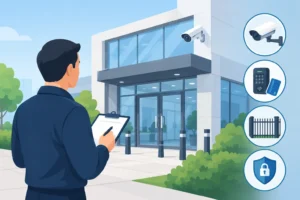
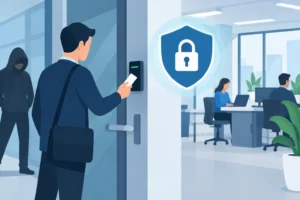
A warehouse security failure rarely starts with a dramatic break-in. More often, it begins with an unsecured pedestrian door, a shared access code, a blind spot by the loading bay or an alarm activation handled too slowly. The best security solutions for warehouses address those everyday gaps with layered protection that deters intrusion, controls access and ensures a trained response when something goes wrong.
For facilities managers and operations teams, the aim is not to place a guard at every door or install technology for its own sake. It is to create a proportionate security plan around the site’s stock value, operating hours, layout, staff movement and exposure to risk. A busy distribution centre needs different controls from a smaller storage unit, but both need clear accountability and reliable cover outside normal working hours.
Start with the warehouse risk profile
Before selecting equipment or arranging security cover, assess how the building is actually used. Walk the perimeter after dark, not only during a daytime site visit. Check fencing, gates, roof access, fire exits, loading doors, staff entrances and areas where vehicles can be concealed. Consider whether neighbouring units are occupied overnight and how quickly police or a response officer could reach the premises.
The stock profile matters just as much. High-value, easily resold goods, tools, alcohol, electronics and controlled products can make a warehouse a more attractive target. So can stock held temporarily during seasonal peaks. Criminals may also target fuel, catalytic converters, plant, copper cabling and information stored in site offices.
Internal risk should be considered without creating an atmosphere of distrust. Poor key control, unmanaged contractor access and unclear procedures for deliveries can create opportunities for loss. A sound plan protects staff and supports fair, consistent processes.
The best security solutions for warehouses work in layers
No individual measure provides complete protection. Cameras record evidence but do not physically secure a door. A strong gate discourages access but cannot identify who has entered through a legitimate route. The most dependable warehouse security combines physical safeguards, controlled access, detection and a professional response.
Perimeter security and visible deterrence
A secure perimeter increases the effort and time required to reach the building. Appropriate fencing, well-maintained gates, anti-climb measures and clear warning signage can discourage opportunistic intrusion before it reaches the warehouse itself. Lighting should cover entrances, yards, pathways and vulnerable sections of fencing without creating glare that reduces camera performance.
Large sites should give particular attention to vehicle access. Separate pedestrian and vehicle routes where practical, maintain a clear record of authorised vehicles and make sure gates are closed when the yard is not in active use. Delivery schedules should not become an open invitation for unauthorised entry.
Physical measures need regular inspection. Damaged fencing, failed gate locks and vegetation obscuring cameras are small defects that can quickly become known weaknesses.
Access control and disciplined key management
Warehouses often have more keys, padlocks, roller shutters and access points than managers realise. If keys are copied, passed between shifts or held by former employees, there is no dependable audit trail. Controlled key holding, signed issue records and a clear return process reduce this exposure.
Electronic access control can provide further accountability, particularly at office doors, stock cages, IT rooms and restricted areas. Cards, fobs or coded credentials can be withdrawn when a worker leaves and access permissions can reflect job roles and shift patterns. For higher-risk areas, consider whether two-factor access or visitor escorting is justified.
The trade-off is operational practicality. Overly complicated access processes can lead staff to prop doors open or share credentials. The right system should be firm where it needs to be, while allowing authorised teams to work efficiently.
Intruder alarms, CCTV and remote monitoring
An intruder alarm remains a central part of warehouse protection, especially when a site is vacant overnight, at weekends or during shutdown periods. Detection should cover likely entry routes, including roller shutters, personnel doors, offices and vulnerable internal areas. Alarm maintenance and clear setting procedures are essential. A system that regularly generates false activations can lead to poor staff habits and unnecessary call-outs.
CCTV is most effective when it is designed around specific risks. Cameras should identify activity at gates, loading bays, entrances, stock areas and perimeter approaches. Image quality, lighting, camera positioning and retention periods all matter. A camera installed too high, aimed into darkness or obscured by racking may offer little useful evidence.
Remote monitoring can add an active layer to alarms and cameras. It enables suspicious activity to be assessed promptly and supports an informed escalation decision. However, it should be paired with a reliable on-the-ground response arrangement. Someone still needs to attend when a site requires inspection, access for emergency services or secure re-locking.
Mobile patrols and alarm response
Mobile security patrols provide an unpredictable, visible presence outside working hours. Officers can inspect perimeter fencing, gates, doors, windows and external plant, reporting defects before they become an incident. Patrols may also check that shutter doors are closed, lights are not left on unnecessarily and no unauthorised vehicles are present.
For alarm activations, a key holding and alarm response service protects nominated employees from attending a potentially unsafe site in the early hours. A trained, SIA-licensed officer can attend, assess the situation, liaise with emergency services where required and arrange for the premises to be secured. This reduces disruption for senior staff and provides a documented response.
Response arrangements should be clear before an incident occurs. Confirm who can authorise repairs, which alarm engineers should be called, where spare keys are held and what circumstances require management escalation. Delay and uncertainty are costly when a shutter is damaged or a property has been compromised.
Manned guarding for periods of heightened risk
Permanent guarding is not necessary for every warehouse, but it can be justified during periods of unusual exposure. Examples include major stock deliveries, seasonal peaks, construction works, industrial action, repeated incidents or a temporary failure in the alarm system. A security officer can manage visitor access, check vehicles, conduct patrols and maintain a visible deterrent.
The value comes from deployment that matches the risk. A guard positioned only at a reception desk may not protect a large yard or several loading bays. The assignment instructions should set out patrol routes, access procedures, reporting requirements, escalation contacts and the boundaries of the officer’s role.
Build security into daily warehouse operations
Technology and guarding are stronger when staff know what good security looks like. Shift leaders should check that doors and gates are secured at handover, visitors are signed in, keys are accounted for and any defects are reported immediately. Contractors should be expected to follow the same access and sign-out procedures as permanent staff.
A practical lock-up checklist can prevent avoidable vulnerabilities. It should cover roller shutters, pedestrian doors, alarm setting, office windows, external gates, keys, forklifts, sensitive documents and equipment left in yards. The checklist is not bureaucracy – it is evidence that critical controls were completed.
Incident reporting also deserves attention. Record suspicious activity, attempted access, damaged barriers, repeated alarm activations and near misses. Patterns often emerge over time, allowing managers to improve lighting, patrol frequency or access arrangements before a serious loss occurs.
Selecting a warehouse security partner
When outsourcing security support, look beyond the headline price. Ask how alarm activations are managed, whether response staff are properly licensed, how keys are logged and stored, what reporting you will receive and whether the provider can scale coverage during busy periods. Accreditations, quality processes and local operational capacity are meaningful indicators where the provider will hold sensitive access to your premises.
For warehouse operators in Greater Manchester, KCS provides key holding, alarm response, mobile patrols, manned guarding and open-up or lock-up support designed around the realities of commercial property. The right provider should feel like an extension of your operational team: dependable, accountable and ready to act when your site is most vulnerable.
A warehouse cannot eliminate every risk, but it can make intrusion harder, loss easier to investigate and incidents faster to control. Review the site after any operational change, expansion or security event. The strongest protection is not a one-off installation – it is a security routine that continues to work when the building is empty and the stakes are highest.