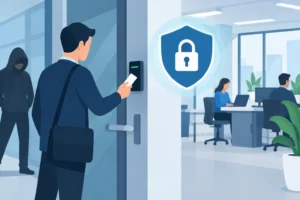
An alarm activation at 2am is not simply an inconvenience for the person holding the keys. It is a live security event with unknown circumstances behind it. Knowing how to handle alarm activations safely means protecting people first, preserving the premises and making measured decisions before anyone enters a potentially compromised site.
For commercial premises, the safest response is rarely to send an untrained employee from home to investigate alone. A clear alarm response procedure gives your team confidence, reduces personal risk and helps your business return to normal operations with minimal disruption.
Treat every activation as a genuine incident
Many activations turn out to be caused by user error, environmental factors or equipment faults. A door may not have been secured properly, an insect may trigger a detector, or a power issue may affect the system. However, the person responding cannot safely make that assumption before the site has been assessed.
An alarm may indicate attempted entry, criminal damage, trespass, fire or another building fault. The key principle is straightforward: do not place a member of staff in a position where they could encounter an intruder, hazardous condition or unsecured area without appropriate support.
Your alarm receiving centre should contact the agreed keyholders using the response instructions held for your account. Those instructions need to be current, practical and understood by everyone named. Out-of-date contact details, unclear access arrangements and missing key information can turn a manageable call-out into a longer and more costly incident.
Separate intrusion alarms from life-safety alarms
The right action depends on the type of signal received. An intruder alarm demands a security-led response, while a confirmed fire alarm, panic alarm or monitored life-safety signal may require an immediate emergency response in line with your site procedures.
If the alarm receiving centre advises that police, fire and rescue, or another emergency service has been contacted, follow their instructions. Do not enter the premises to investigate. Meet emergency responders only when it is safe to do so and provide the information they need, such as access points, hazards, site plans and relevant contact details.
For an intruder alarm, ask the monitoring provider what has activated, whether there have been sequential activations and whether any visual verification is available. This information can help determine the level of risk, but it should never be used as a reason for an untrained keyholder to take chances.
How to handle alarm activations safely on arrival
If an authorised keyholder is expected to attend, they should not rush straight to the entrance or attempt to deal with the incident alone. Personal safety must remain the priority.
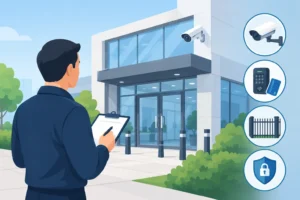
On arrival, remain alert and assess the exterior from a safe position. Look for damaged doors, broken glazing, open gates, vehicles that appear out of place, signs of forced entry or people near the premises. Do not approach anyone acting suspiciously and do not confront a suspected intruder.
If there is any indication that the premises may be insecure or occupied, move to a safe location and contact the police. Do not enter to check individual rooms, search storage areas or reset the system. A building can appear quiet while still presenting a serious risk.
Where there are no obvious signs of a break-in, the responder should still follow an agreed process. This normally includes checking the exterior, entering only when safe to do so, disarming the system, inspecting agreed areas and identifying the likely cause of activation. Any inspection should be proportionate to the responder’s training and the site’s risk assessment.
A professional mobile response officer is trained to carry out these tasks methodically, report defects and secure the site where possible. This removes the pressure from directors, managers and employees who may otherwise be asked to attend unfamiliar or isolated premises at unsocial hours.
Build a response plan before the alarm sounds
Safe alarm handling begins long before an activation occurs. A response plan should set out exactly who receives notifications, who can authorise decisions and what actions are expected for different alarm types.
Your plan should identify primary and secondary contacts, with at least one reliable alternative if the first person is unavailable. It should also record who holds keys, codes and access credentials, alongside details of gates, shutters, alarms, safes, plant rooms and restricted areas. Sensitive security information should be controlled carefully and only shared with authorised people.
For larger premises or multi-site operations, a simple escalation structure prevents confusion. The alarm receiving centre contacts the nominated response provider or keyholder, the responder attends or arranges an appropriate emergency service response, and a report is sent to the responsible manager. This ensures decisions are traceable rather than made through a chain of late-night calls.
The plan should also cover practical continuity issues. If a door cannot be secured, can a guard remain on site? If a shutter is damaged, who can arrange an emergency repair? If the alarm cannot be reset, is there a process for temporary guarding or enhanced patrols? Thinking through these situations in advance protects both the property and the following day’s operations.
Do not make employees the default responders
It can be tempting to nominate a member of staff simply because they live nearby or have keys. But proximity is not a security qualification. Asking an employee to attend alone can expose them to confrontation, travel risks and stressful decisions outside their normal role.
This is particularly relevant for industrial units, vacant properties, retail sites and offices on quiet business parks, where an activation may occur when few people are nearby. Lone working obligations still apply, and an alarm call-out should be considered within your wider health and safety responsibilities.
An outsourced key holding and alarm response service gives businesses a controlled alternative. A trained, licenced officer can attend on behalf of the organisation, assess the situation, liaise with emergency services where required and provide a detailed incident report. Your internal team remains informed without being unnecessarily exposed.
For businesses across Greater Manchester, local response capability can make a meaningful difference when a site needs prompt attendance. The objective is not simply speed. It is a safe, accountable response from someone equipped to deal with the uncertainty of an out-of-hours activation.
Keep records that improve future responses
Every activation should produce an accurate record, even when the cause is minor. Note the time of the activation, alarm zone or device involved, people contacted, actions taken, condition of the site and any follow-up work required.
Patterns often reveal issues that would otherwise go unnoticed. Repeated false activations from one detector may point to a maintenance requirement. Regular activations after a particular shift could indicate a training gap in lock-up procedures. Damage at the same access point may justify changes to lighting, perimeter protection or patrol frequency.
A good incident report also supports insurance discussions, contractor call-outs and internal accountability. It should state facts clearly rather than assumptions. If the cause cannot be confirmed, record that it remains unconfirmed and arrange further investigation.
Test people and procedures, not only equipment
Alarm systems need routine servicing, but equipment checks alone do not guarantee a safe response. Review contact lists regularly, particularly after staffing changes. Confirm that keyholders understand their responsibilities and that the alarm receiving centre has the correct escalation instructions.
It is equally valuable to test access arrangements. Keys may have been moved, codes changed, gates may be locked differently or a new tenant may affect entry routes. These details matter when a responder is attending under pressure in poor weather or darkness.
KCS provides key holding and alarm response as part of a wider physical security service designed to protect commercial premises without placing internal teams at unnecessary risk. A disciplined response process, supported by appropriately licenced personnel, gives businesses reassurance when an alarm sounds outside normal hours.
The most effective alarm response is the one your people do not have to improvise. Give them clear instructions, maintain accurate site information and ensure a capable responder is ready to act when the premises need protection most.